
Guide · 13 min read
7 Simple Games for Dementia Patients

A caregiver sits at the kitchen table with a parent who wants company but no longer has the patience for complicated rules. The caregiver needs an activity that matches the person's energy, abilities, interests, vision, hearing, mobility, and attention span, without making the afternoon feel like a test.
The best simple games for dementia patients are flexible rather than competitive. They can be shortened, simplified, played cooperatively, or replaced when the person becomes tired. This guide focuses on clear instructions, practical benefits, sensory and mobility adaptations, caregiver support, and safety. It also shows how familiar activities can fit naturally into in-home visits, where clinicians can discuss routines and caregiver concerns without turning games into medical treatment.
Life Primary Care provides geriatric and dementia care in familiar surroundings. Families comparing options may also want to find quick-to-learn board games that can be adjusted for different abilities.
Table of Contents
- 1. Memory Card Matching Games
- 2. Bingo With Large-Print Cards
- 3. Puzzle Assembly With Large Pieces
- 4. Gardening Activities And Plant Care
- 5. Music Listening And Sing-Along Sessions
- 6. Sensory Stimulation Boxes And Textures
- 7. Simple Crafts And Coloring Activities
- 7 Simple Dementia Games Comparison
- Build A Flexible Activity Routine At Home
1. Memory Card Matching Games
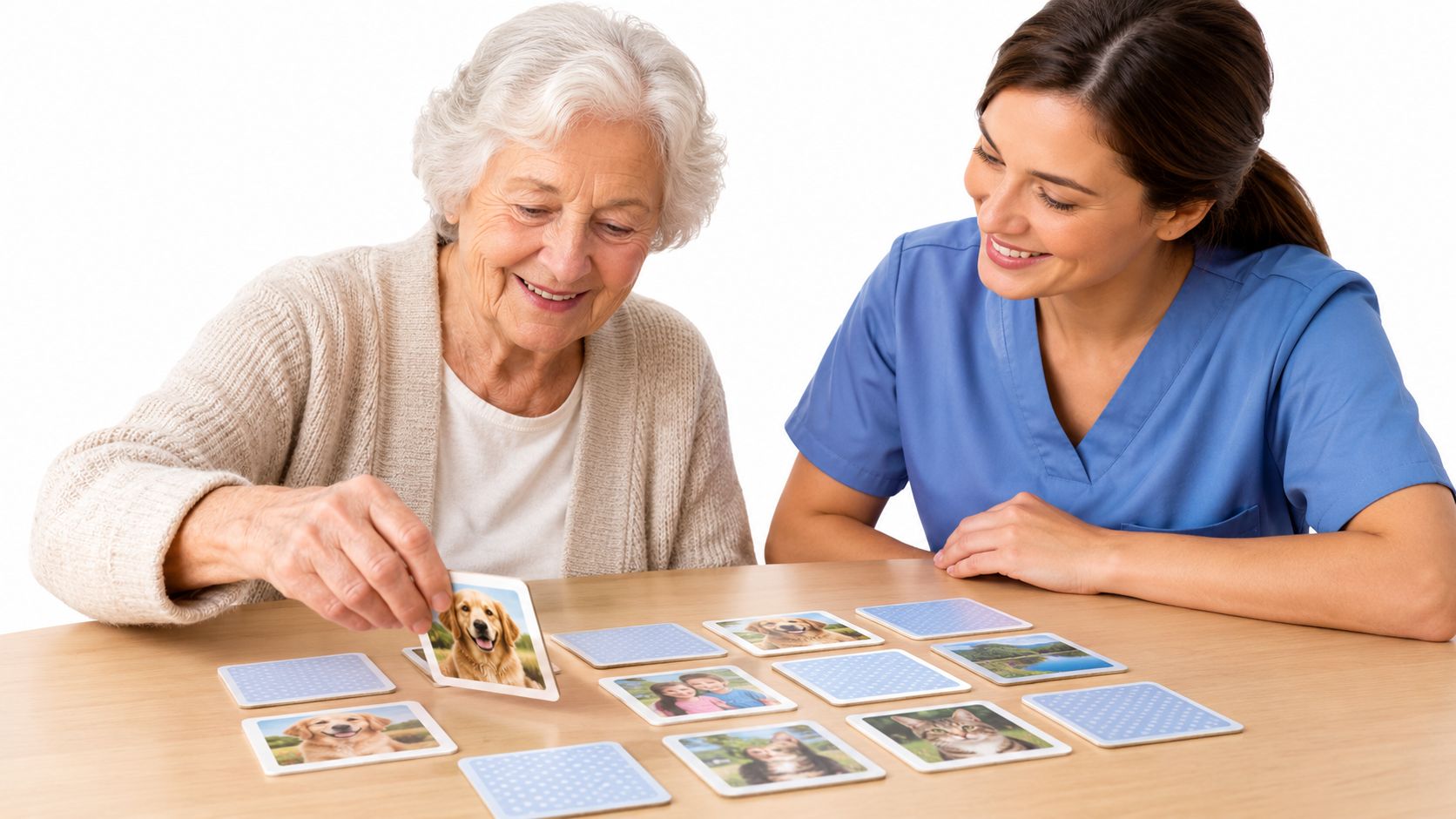
Memory card matching works well because the task is visible and easy to simplify. Place pairs of cards face down, turn over two at a time, and look for matches. For a person with dementia, the activity should feel like shared discovery, not an examination of recall.
Use large cards with high-contrast images. Family photographs, pets, favorite foods, household objects, or familiar local scenes often create more conversation than abstract symbols. A caregiver can begin with only a few pairs, keep cards face up for a recognition game, or offer two possible cards instead of requiring independent searching.
Practical rule: Give the person extra processing time. A pause doesn't mean the activity has failed.
A caregiver might say, “Let's find the other flower,” rather than repeatedly asking, “Do you remember where it was?” Successful matches deserve warm acknowledgment, but mistakes don't need correction. The caregiver can turn the cards back over and continue.
Make the table easier to use
Keep the cards well spaced and place them on a stable, uncluttered surface. Poor lighting, small print, and busy backgrounds can make a simple activity unnecessarily difficult, particularly when vision loss is also present. A visiting clinician may observe how the person sees, reaches, handles cards, and responds to prompts during an In-Home Doctor Visit, then suggest practical changes to the routine.
Short sessions are usually easier to sustain than an open-ended game. Stop when the person looks tired, frustrated, or ready to move on. The useful outcome may be a smile, a story about a family photograph, or willingness to try again later, not the number of pairs completed.
2. Bingo With Large-Print Cards
Bingo adds listening, visual tracking, hand movement, and social participation without requiring a complicated strategy. A caller announces a number or picture, and the player looks for the matching space. Large-print cards and oversized markers make the activity more accessible when standard bingo materials feel crowded.
The caregiver should read slowly, repeat the call when needed, and allow time for the player to locate the space. Picture bingo may work better than number bingo for someone who has limited literacy or difficulty distinguishing small numerals. Animal, seasonal, food, or household-object themes can make the cards more familiar.
A group can play cooperatively, with everyone helping locate the called item. Remove the pressure to win by treating a completed row as a shared accomplishment rather than a competition. Small non-monetary rewards, such as a favorite snack or choosing the next song, can add pleasure without making money part of the activity.
Adjust the pace and setup
Bingo is most successful when the caregiver prepares the table before inviting the person to play. Use one card, a clear marker, and minimal background noise. If the person has arthritis or tremor, choose markers that are easy to grasp, or let them point while the caregiver places the marker.
The Alzheimer's Association activity guidance includes familiar games such as checkers, dominoes, card games, Mahjong, and cornhole, while emphasizing safety and adaptation to ability. That same principle applies here. The person can participate by listening, pointing, choosing a marker, or celebrating someone else's result.
3. Puzzle Assembly With Large Pieces
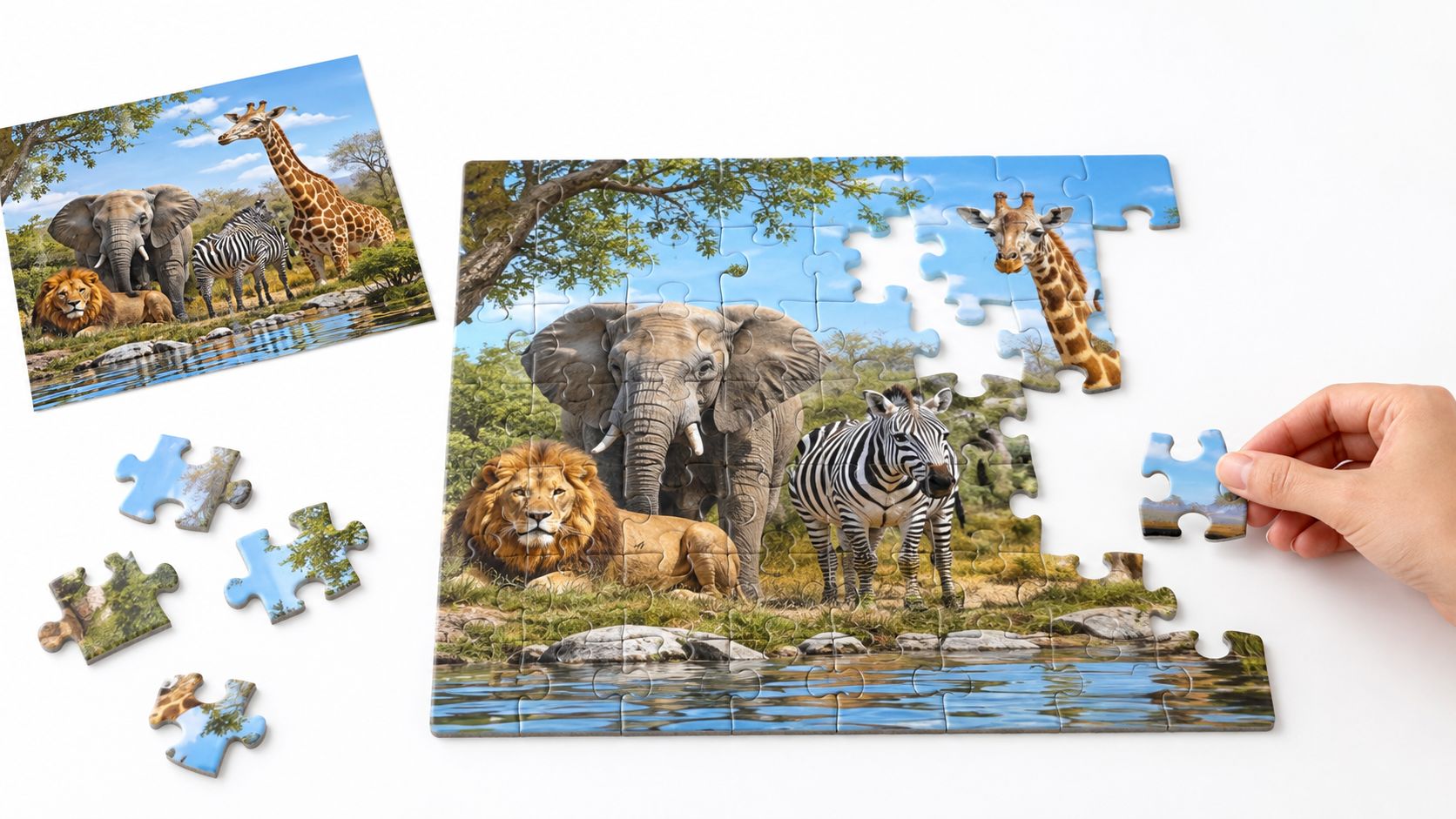
A large-piece puzzle offers a concrete task without a running score or obvious winner. The person can sort, identify colors, place a single piece, or work with a caregiver toward a recognizable picture. Familiar scenes, animals, favorite places, and meaningful hobbies are usually more inviting than highly detailed images.
Puzzle difficulty should follow the person's current response, not an assumed stage label. A caregiver might place several pieces near their likely locations, separate edge pieces, or complete part of the image in advance. Someone with limited attention can work on one small area and leave the rest for another session.
Use a puzzle board, tray, or cookie sheet with raised edges so pieces stay contained. This also makes it easier to move an unfinished project safely. A stable table at a comfortable height reduces unnecessary bending and reaching.
Keep progress visible
Sorting pieces by color or edge shape can provide a useful first task. If the person becomes stuck, demonstrate one placement instead of explaining several steps. Praise effort and observation, such as noticing a color or finding a matching edge, rather than praising only correct completion.
The NHS guide on dementia activities identifies dominoes, solitaire, bridge, and snap as familiar number or calculation games, while stressing that participation and enjoyment matter more than achieving a particular score. Puzzles follow the same standard. A partly completed picture can still represent a satisfying session.
A puzzle should create calm focus, not pressure to finish.
A caregiver can store the project in a labeled container and return to it when the person is alert. If pieces become a source of frustration or a safety concern, switch to a picture book, music, or another activity with fewer handling demands.
4. Gardening Activities And Plant Care
Gardening isn't a conventional board game, but it provides the same kind of structured participation with more sensory and mobility options. A person can touch soil, choose a plant, water a container, remove a leaf, or just watch new growth. Seated gardening, raised beds, windowsill herbs, and lightweight containers allow participation when walking or standing is difficult.
Choose hardy plants such as pothos, spider plants, or herbs. Lightweight watering cans and pre-moistened soil reduce strain. Place plants at waist height for someone seated, and keep tools within easy reach so the activity doesn't require repeated bending or carrying.
A simple watering card can add routine. The caregiver might invite the person to check the soil, choose between two plants, or take a photograph of new growth. The task should remain optional. A plant that requires frequent complicated care may create more frustration than purpose.
Families needing comfort-focused support can also review comfort care at home with their care team. Gardening may be part of a soothing routine, but it shouldn't replace attention to fatigue, pain, balance, or other concerns.
Use gardening as conversation
Ask about a favorite flower, a former garden, or a recipe that uses basil. The person may contribute through touch, smell, pointing, or observation even when verbal communication is limited. A caregiver can celebrate growth with photographs and display them where the person can see them.
For inspiration beyond containers, caregivers can build a bog garden with Little Green. Keep water spills, soil, sharp tools, plant toxicity, and small loose materials in mind. A home visit can help the care team understand whether the setup is practical in the person's actual living space.
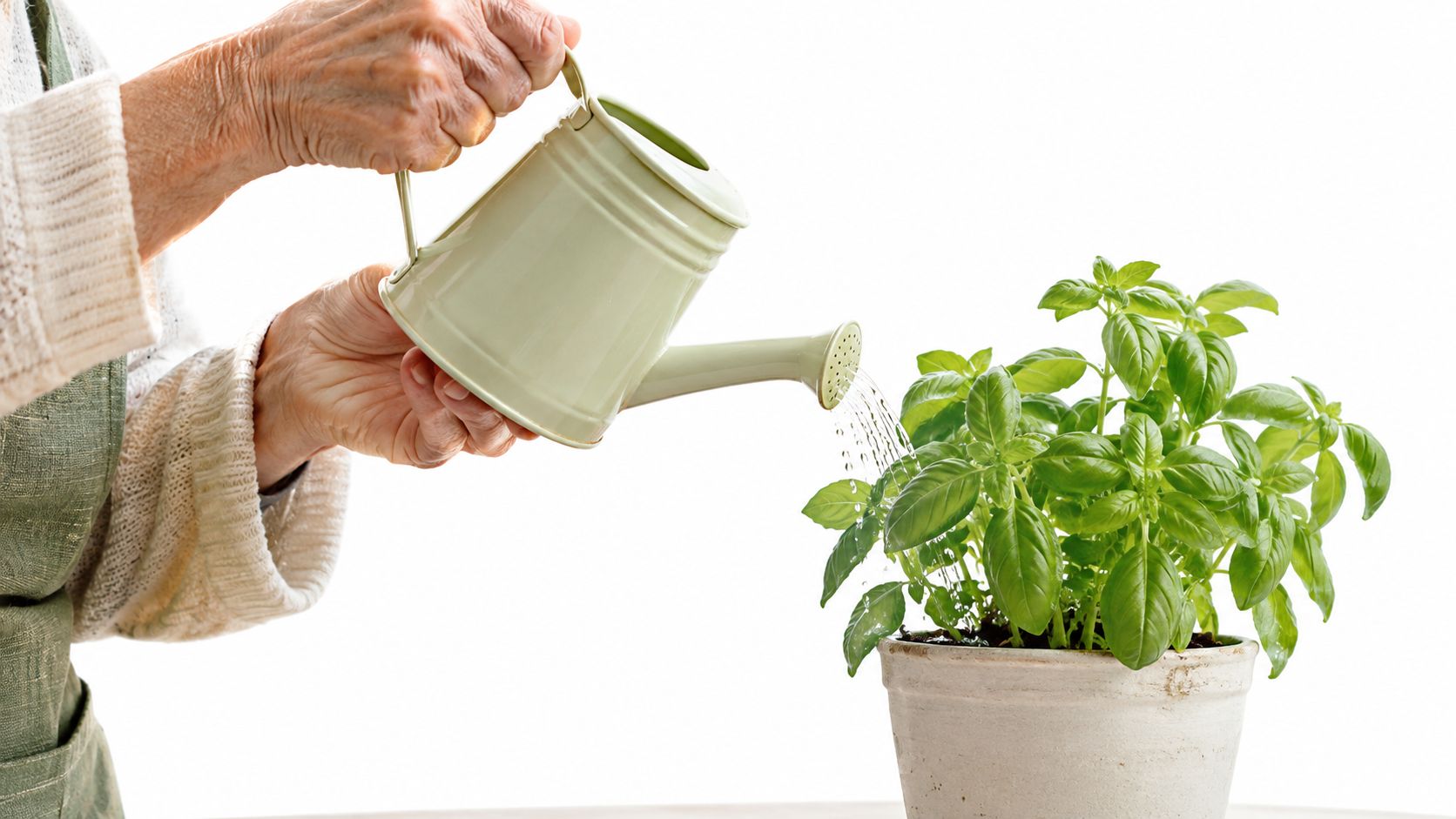
A short demonstration can help caregivers see how a plant-care routine might work without turning it into a demanding chore.
5. Music Listening And Sing-Along Sessions
Music requires little equipment and can meet a person at many levels of cognitive ability. A familiar song may invite listening, humming, clapping, swaying, conversation, or singing. The person doesn't need to remember an artist or explain why a song matters for the session to be meaningful.
Start with the person's preferences, not a generic “dementia playlist.” Family members can identify favorite artists, religious songs, dance music, radio programs, or music connected with work and family life. Spotify, YouTube Music, and Apple Music make it easy to create separate playlists for morning energy, afternoon activity, or evening calm.
Keep volume comfortable and watch the person's response. Some songs may bring strong emotions or uncomfortable memories. If that happens, acknowledge the reaction and change the music rather than insisting that a supposedly familiar song should help.
Add movement without making it exercise
Printed lyrics, closed captions, or lyric videos can support participation, but nobody should be pressured to sing. Humming, tapping a hand, holding a rhythm instrument, or listening all count as engagement. A caregiver can pair music with a transition, such as getting dressed, preparing lunch, or settling down before bed.
Families can review dementia care at home when they need broader guidance around routines and caregiver observations. During an In-Home Doctor Visit, caregivers can mention which music changes mood, encourages movement, or causes distress. That information may help clinicians understand the person's daily patterns without treating music as a cure or diagnostic test.
6. Sensory Stimulation Boxes And Textures
A sensory box offers engagement without requiring the person to remember rules, count spaces, or produce a correct answer. Fill it with safe objects that differ in texture, shape, weight, or scent. Soft fabric, smooth wood, a textured ball, a warm blanket, a measuring cup, or a familiar scarf can invite touch and conversation.
The box should be personalized. A fabric connected with sewing, a wooden object related to a former job, or a familiar kitchen item may be more meaningful than commercially packaged materials. The caregiver can present one object at a time and watch whether the person reaches, holds, smells, pushes away, or returns to it.
Safety comes before variety. Inspect every object for sharp edges, loose parts, choking hazards, irritating scents, and materials the person may put in their mouth.
Avoid overwhelming the person with a full container of objects. Place two or three choices on the table and let the person explore at their own pace. Soft fleece, bumpy rubber, smooth wood, textured rope, and cool metal can provide contrast, but the caregiver should remove anything that causes discomfort or agitation.
Let the person lead
Sensory activities may work particularly well when speech is limited. The person can participate through reaching, holding, eye contact, facial expression, or relaxation. A caregiver's job is to observe preference, not demand a verbal explanation.
A systematic review of cognitive-intervention technologies found that people with cognitive impairment often needed more time and assistance, and that completion alone didn't capture whether an activity was enjoyable. Its practical recommendations include simple instructions, spoken prompts, large selectable targets, minimal menus, and caregiver-accessible help, principles that also apply to hands-on activities in the home. Caregivers can discuss a personalized sensory routine during geriatric and dementia care visits.
7. Simple Crafts And Coloring Activities
Coloring, painting, collage, and basic crafts provide a visible result without demanding complex memory. The person can choose colors, make marks, arrange pre-cut shapes, or watch someone assemble the more difficult part. Large-print designs, thick markers, broad crayons, and materials that don't require precise cutting make participation easier for people with arthritis, tremor, or reduced dexterity.
Set up the workspace before inviting the person to begin. Put only the needed supplies within reach, use a stable chair and table, and keep the design age-respectful. A simple scenery, floral pattern, familiar object, or family-themed collage may feel more dignified than childish worksheets.
Value expression over precision
Don't correct color choices or take over because the result looks unfinished. The caregiver can say, “You chose a bright color for that flower,” or ask whether the person wants to add another shape. Pairing the activity with conversation or familiar music can turn solitary work into shared time.
For someone who tires quickly, offer a small area to color or a single collage step. For someone who enjoys sustained focus, an unfinished project can remain available for another session. The right duration depends on the person's response, not on completing the page.
Frame or photograph finished work and display it where the person can enjoy seeing it. That small act reinforces participation and gives family members an easy opening for conversation. Crafts can also fit into routines discussed during post-hospital follow-up or other Doctor House Calls for Seniors, especially when the caregiver wants a calm activity after a demanding transition.
7 Simple Dementia Games Comparison
| Activity | 🔄 Implementation Complexity | ⚡ Resource Requirements | ⭐ Expected Outcomes | 📊 Ideal Use Cases | 💡 Key Advantages / Tips |
|---|---|---|---|---|---|
| Memory Card Matching Games | Low, simple setup; needs facilitator for play | Low, printed/large cards, table space | Improves short-term memory, attention, pattern recognition | One‑on‑one visits; small groups; brief cognitive checks | Customizable difficulty; use familiar photos; 10–15 min sessions |
| Bingo With Large-Print Cards | Low, caller/coordination required for groups | Low–Medium, large cards, daubers, optional amplifier | Boosts social engagement, attention and anticipation | Group activities in assisted living; caregiver respite; scheduled programs | Highly social; schedule when alert; vary themes and prizes |
| Puzzle Assembly With Large Pieces | Low–Medium, needs workspace and possible multi-session planning | Low, large-piece puzzles, board, storage space | Enhances visuospatial skills, problem‑solving, sense of accomplishment | Individual or paired sessions; multi‑day activities | Use meaningful images; limit to 20–30 min; use puzzle board |
| Gardening Activities and Plant Care | Medium, requires accessible setup and ongoing maintenance | Low–Medium, plants, containers, soil, adaptive tools, space | Reduces anxiety, promotes gentle movement, provides purposeful engagement | At‑home visits; raised beds in assisted living; seasonal workshops | Start with hardy plants; use waist‑height containers; simple checklist |
| Music Listening and Sing‑Along Sessions | Very Low, minimal setup; playlist customization advised | Very Low, audio device, playlists; optional amplification | Strong emotional recall; reduces agitation; improves mood | One‑on‑one visits, group sing‑alongs, transition routines (evening) | Use era‑specific playlists; display lyrics; pair with gentle movement |
| Sensory Stimulation Boxes and Textures | Low–Medium, careful item selection and safety checks | Low, household/craft items; periodic refreshes | Highly effective for advanced dementia; calms agitation via tactile input | Advanced dementia, non‑verbal patients, OT sessions | Rotate items monthly; include meaningful objects; avoid choking hazards |
| Simple Crafts and Coloring Activities | Low, requires setup and material prep | Low, large‑print books, thick markers, non‑toxic supplies | Promotes fine motor skills, creativity, calm focus, and accomplishment | Short sessions, group classes, post‑discharge routines | Use easy‑grip tools; break projects into short steps; display finished work |
Build A Flexible Activity Routine At Home
Choose one activity by starting with the person, not the list. A former gardener may respond to watering herbs, while someone who dislikes handling objects may prefer music. A person with poor vision may do better with singing or textured materials, while someone with limited mobility may enjoy a seated puzzle, coloring, or a plant placed at comfortable height.
Keep the first attempt simple. Demonstrate one step, offer two or three choices, and wait for a response. Remove timers, complicated scoring, small pieces, and unnecessary competition. Familiar activities usually work better when the caregiver changes the rules to protect confidence.
The Cochrane review of cognitive stimulation included 37 randomized or controlled studies involving 2,766 people with mild-to-moderate dementia, with participants represented across 17 countries and five continents. Programs commonly used accessible activities such as word games, quizzes, reminiscence, music, categorization, and discussion. Compared with usual care or unstructured activities, the pooled cognitive benefit was small but measurable, with a standardized mean difference of 0.40, and the review found more apparent benefits when group sessions occurred at least twice weekly and dementia was at a milder stage. Read the Cochrane evidence on cognitive stimulation for the limits and context of those findings.
That evidence supports structured engagement, not a promise of memory recovery. The World Health Organization reports that approximately 57 million people worldwide were living with dementia in 2021, with more than 60% living in low- and middle-income countries, and nearly 10 million new cases occurring each year. Those figures help explain why familiar, low-cost activities matter, but they don't make any individual game a treatment. Families should choose games for connection, comfort, communication, and participation.
Stop when the person appears tired, distressed, agitated, uncomfortable, unsteady, or unsafe. A five-minute music session may be more successful than a long puzzle session that ends in frustration. Supervise closely when objects could be swallowed, plants or scents may irritate, balance is involved, or the person needs help handling materials.
For families in northern and central New Jersey, Life Primary Care offers in-home geriatric and dementia care, medication reviews, wellness visits, chronic disease management, and follow-up coordination. Clinicians can discuss activity routines in the familiar home environment, where they can also notice mobility, lighting, seating, medication organization, and caregiver pressures. The service covers Morris, Essex, Union, Somerset, Passaic, and Bergen counties.
Life Primary Care brings primary care house calls, geriatric and dementia care, medication reviews, wellness visits, and post-hospital follow-up to patients across northern and central New Jersey. If your family needs practical support for safe, comfortable routines at home, visit Life Primary Care to learn more and request care.
Ready for a visit at home?
Call and speak with a real person. We will confirm your insurance, find a time and come to you.
973-607-4911 Call now