
Guide · 12 min read
Senior Primary Care: A Practical Guide for Older Adults
A trip to the doctor can take most of a day for an older adult. A 78-year-old woman with arthritis and heart failure may spend 45 minutes waiting in a clinic lobby, miss the medication window that keeps her symptoms controlled, and arrive at the examination room too exhausted to explain what changed at home. Her family may assume she needs a different doctor, when the bigger problem is that the setting no longer fits her life.
Senior primary care is the ongoing relationship that helps an older adult prevent illness, manage existing conditions, respond to new problems, and coordinate follow-up. It isn't the same as an urgent care visit, a specialist consultation, or a single annual appointment. It can happen in an office, a geriatric clinic, an assisted living community, or the patient's home through At-Home Doctor Visits.
The useful question isn't just, “Which doctor should we choose?” It's, “Which care setting, team, and follow-up plan can this person use consistently?” Families looking for Visiting physicians NJ, Visiting Doctors NJ, or House calls for seniors are often trying to solve that larger access problem. A practical overview of health care delivered where patients live helps show why the broader context matters.
Table of Contents
- What Senior Primary Care Really Means
- Care Needs That Change With Age
- Three Common Models of Senior Primary Care
- Core Services Offered to Older Adults
- How In-Home Primary Care Visits Work
- Why In-Home Primary Care Helps Seniors and Families
- Choosing the Right Option for Your Family
What Senior Primary Care Really Means
Senior primary care connects everyday medical decisions over time. A primary care clinician may review blood pressure, adjust a diabetes plan, investigate a persistent cough, discuss vaccinations, monitor memory, and communicate with a cardiologist. The value comes from seeing how those pieces interact rather than treating each symptom as an isolated event.
For example, a 70-year-old who remains active, drives, and manages a few stable conditions may do well with an office-based internist. An older adult with several chronic illnesses may need longer visits, more medication review, and closer communication between primary care and specialists. Someone who can't safely leave home may need Doctor home visits for elderly patients because the journey itself prevents regular care.
The parts of an ongoing relationship
Senior primary care usually includes three connected activities:
- Prevention: wellness planning, recommended screenings, immunizations, nutrition discussions, and fall-risk review.
- Treatment: management of conditions such as diabetes, heart failure, COPD, hypertension, arthritis, and chronic kidney disease.
- Coordination: medication reconciliation, referrals, post-hospital follow-up, caregiver communication, and planning for changing goals.
The same clinician may provide some services directly and coordinate others with nurses, therapists, pharmacists, specialists, laboratories, or social-service organizations. The setting changes, but the central purpose remains consistent: make care understandable, connected, and workable for the older adult.
Practical rule: A primary care model is only useful if the patient can attend, communicate during, and follow up after the visit.
That's why Dr House calls NJ, Doctor house calls NJ, and Doctor House Calls for Seniors describe more than convenience. For a person with severe mobility limits, oxygen use, dementia, or no dependable transportation, in-home medical care can remove a barrier that office-based care can't solve. Home-based primary care is one part of the broader system, not a replacement for emergency services or every specialty service.
Care Needs That Change With Age
Aging often changes primary care from a sequence of single-problem appointments into layered management. A younger adult may visit for one concern, receive a prescription, and return to normal activities. An older adult may bring diabetes, hypertension, medication side effects, balance problems, hearing loss, and caregiver concerns into the same clinical conversation.
Six changes families commonly notice
Multiple chronic conditions require one connected plan. A person with diabetes and heart disease may need blood pressure, glucose, exercise tolerance, diet, and medication decisions considered together. Treating each diagnosis separately can create conflicting instructions.
Medication load adds another layer. A senior who takes ten pills a day may use several prescribers and pharmacies. Primary care can compare bottles with the current record, identify duplications or confusing directions, and clarify which clinician should manage each medication.
Cognitive changes may appear outside the examination room. Missed bills, repeated questions, unopened mail, or confusion about a pill organizer can signal that the treatment plan needs support. A primary care visit can include a conversation with the patient and, when appropriate, a trusted care partner about safety and decision-making.
Mobility and falls affect whether care is reachable. A short clinic appointment may require bathing, dressing, arranging transportation, transferring into a vehicle, and waiting in several locations. A clinician also needs to understand whether pain, weakness, or an unsafe home layout is limiting daily activity.
Sensory decline can make ordinary instructions unsafe. Hearing loss may cause a patient to miss dosage changes, while poor vision can make labels or warning signs difficult to read. Clinicians can adapt communication and involve caregivers with the patient's permission.
Social changes shape health as much as diagnoses do. After a spouse dies, an older adult may eat poorly, stop exercising, or become isolated. Primary care can screen for depression, ask about food and transportation, and connect the patient with appropriate community support.
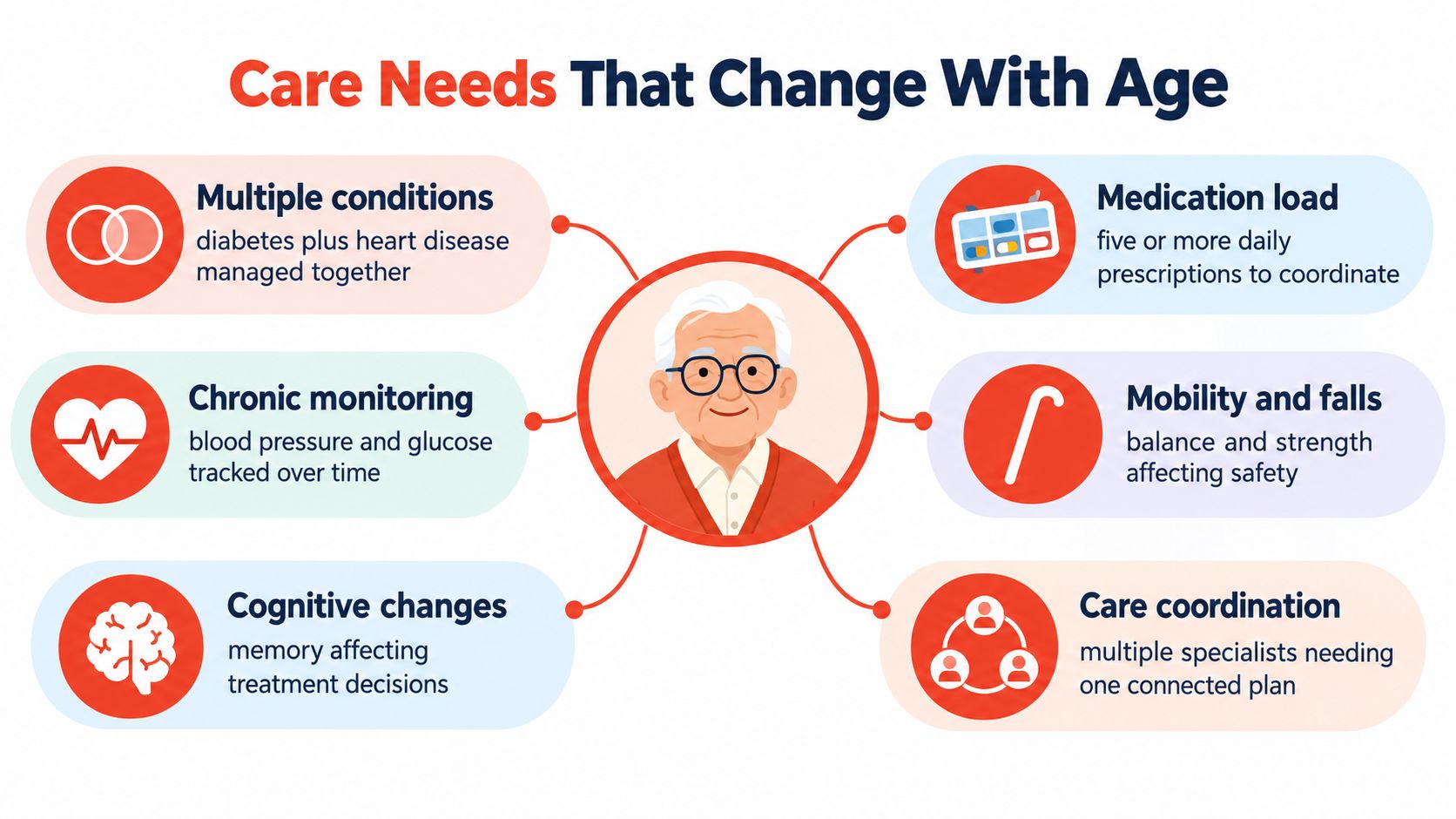
Families can use early warning signs that deserve attention as prompts for a primary care conversation. The purpose isn't to diagnose a condition independently. It's to notice a meaningful change and describe it clearly.
Three Common Models of Senior Primary Care
Senior primary care usually falls across three practical models. The right choice depends on mobility, medical complexity, transportation, caregiver availability, and insurance arrangements. A family may also use more than one model over time.
| Model | Setting | Best For | Key Strength | Main Limitation |
|---|---|---|---|---|
| Office-based primary care | Clinic or medical office | Relatively healthy older adults who can travel safely | Broad access to standard office equipment and staff | Transportation, waiting rooms, and short visits can be difficult |
| Geriatrics specialty practice | Geriatric clinic or hospital-affiliated practice | Older adults with frailty, memory concerns, or interacting conditions | Specialized knowledge of aging, function, cognition, and complex treatment | May have limited availability or require travel |
| Home-based primary care | Patient's home, apartment, or assisted living residence | Homebound or mobility-limited older adults who need ongoing care | Clinician sees the patient's daily environment and removes travel barriers | Some tests and treatments still require outside facilities |
A relatively healthy 70-year-old who can drive may remain with an office-based internist. An 82-year-old with mild arthritis who still travels safely could benefit from a geriatrics clinic, especially if medication choices, memory, or falls are becoming harder to manage. A 90-year-old who is bedbound after a stroke may need a house-call physician because getting to a clinic is unsafe or unrealistic.
Why the categories overlap
These models aren't competing labels that a patient must choose forever. An older adult may use a geriatrician for complex planning, a cardiologist for specialized treatment, and a home-visiting primary care clinician after a major loss of mobility. Someone recovering from surgery may temporarily need in-home follow-up before returning to office care.
Families also confuse home health, home care, and house calls. Home health generally refers to covered skilled services for eligible beneficiaries, while home care often refers to help with daily activities. Primary care house calls are medical visits conducted where the patient lives. A clear comparison of home health, home care, and house calls can prevent families from calling the wrong type of organization.
Medicare home health has its own requirements. Medicare says a beneficiary must need part-time or intermittent skilled services and be homebound. The practical limit is up to 8 hours per day combined and 28 hours per week, with a possible short-term increase to 35 hours per week when medically necessary, and covered home health services can have no out-of-pocket cost when the person qualifies. These rules don't automatically determine eligibility for a medical house call, so families should ask each practice how its service works.
Core Services Offered to Older Adults
A strong senior primary care relationship behaves less like a collection of unrelated appointments and more like a shared medical record with a clear owner. Consider how one older adult's year might unfold.
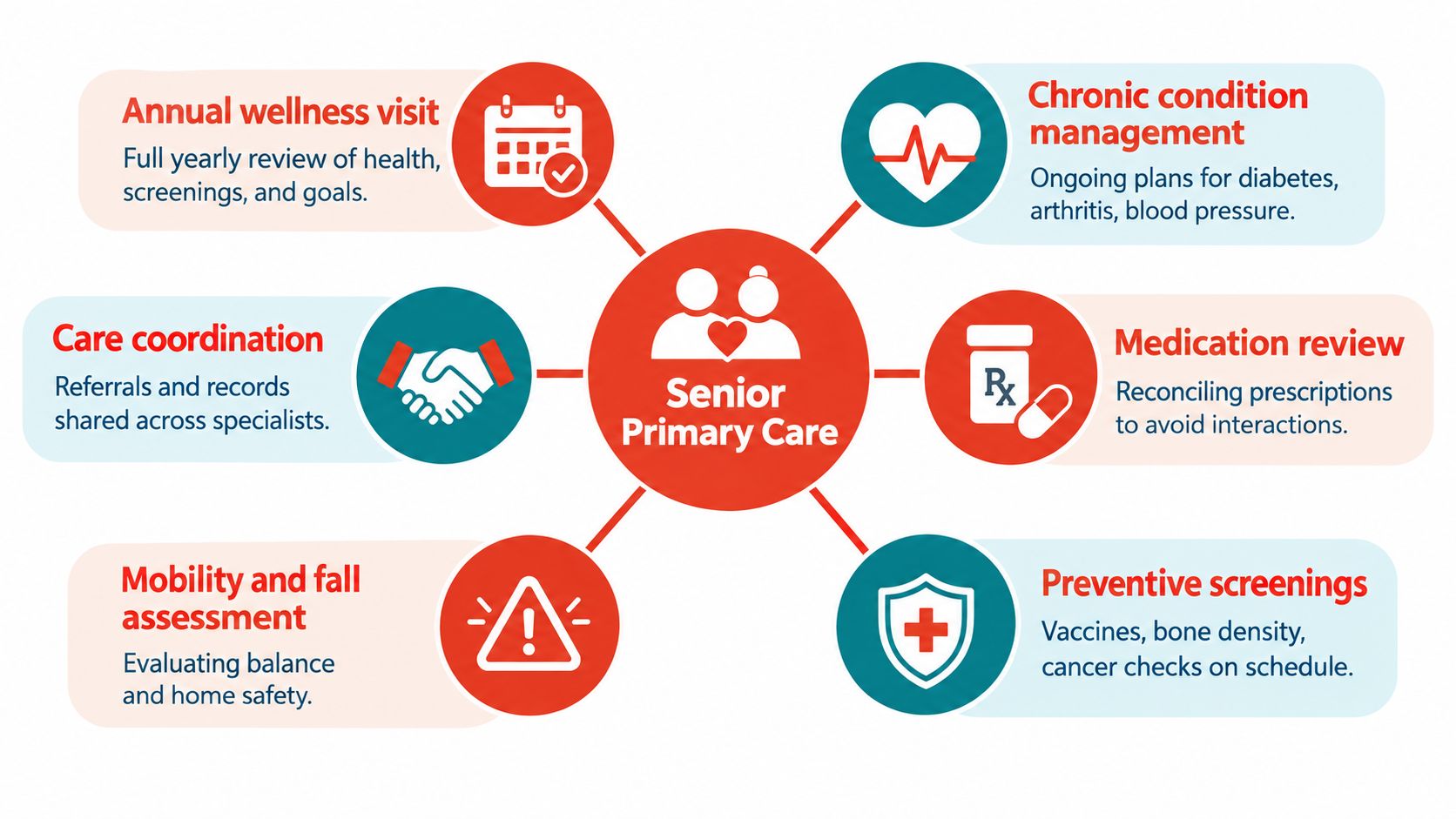
At an annual wellness visit, the clinician reviews medications, preventive needs, memory concerns, mood, mobility, and fall risks in the home. The conversation may reveal that the patient has stopped using the upstairs bathroom because the stairs feel unsafe. That observation can lead to a discussion about function and home safety, not just blood pressure.
Care that continues between appointments
For diabetes management, a routine follow-up may include reviewing glucose patterns, checking blood pressure, examining the feet, discussing nutrition, and confirming that the patient understands the treatment plan. The clinician may also ask whether arthritis, poor vision, or memory problems make testing or medication administration difficult.
An acute visit handles a new issue without automatically sending the patient to an emergency department. A sudden cough, urinary symptom, or skin infection may need prompt assessment and treatment, while serious warning signs require emergency evaluation. Primary care helps sort those pathways safely.
Post-hospital care is another important connection. Within days of discharge, the clinician can compare the hospital instructions with the medications present at home, review symptoms, inspect a wound when appropriate, and clarify follow-up appointments. The family should know who to call if the plan becomes difficult to follow.
Care coordination may involve cardiology, orthopedics, neurology, pharmacy, physical therapy, palliative care, or hospice. It can also include communication with an adult child who lives elsewhere, provided the patient's privacy preferences are respected. Practices managing complex geriatric claims may find this shorten A/R for geriatric claims resource useful for understanding administrative terminology.
The service is the relationship
The same patient may need prevention in one month, an urgent assessment in the next, and a medication review after a specialist visit. A primary care clinician who keeps those events connected can help prevent contradictory instructions and missed follow-up.
A useful question: “Who is responsible for putting all of these recommendations into one understandable plan?”
That question often matters more than the label on the practice door. Office-based teams, geriatric practices, and Visiting Docs can all provide valuable care when their services match the patient's needs and the family knows how to reach them.
How In-Home Primary Care Visits Work
An in-home visit usually begins before the clinician arrives. A coordinator confirms the address, insurance information, preferred contact person, mobility concerns, cognitive changes, and the reason for the visit. The family should gather every prescription bottle, over-the-counter product, supplement, discharge paper, and specialist instruction available.
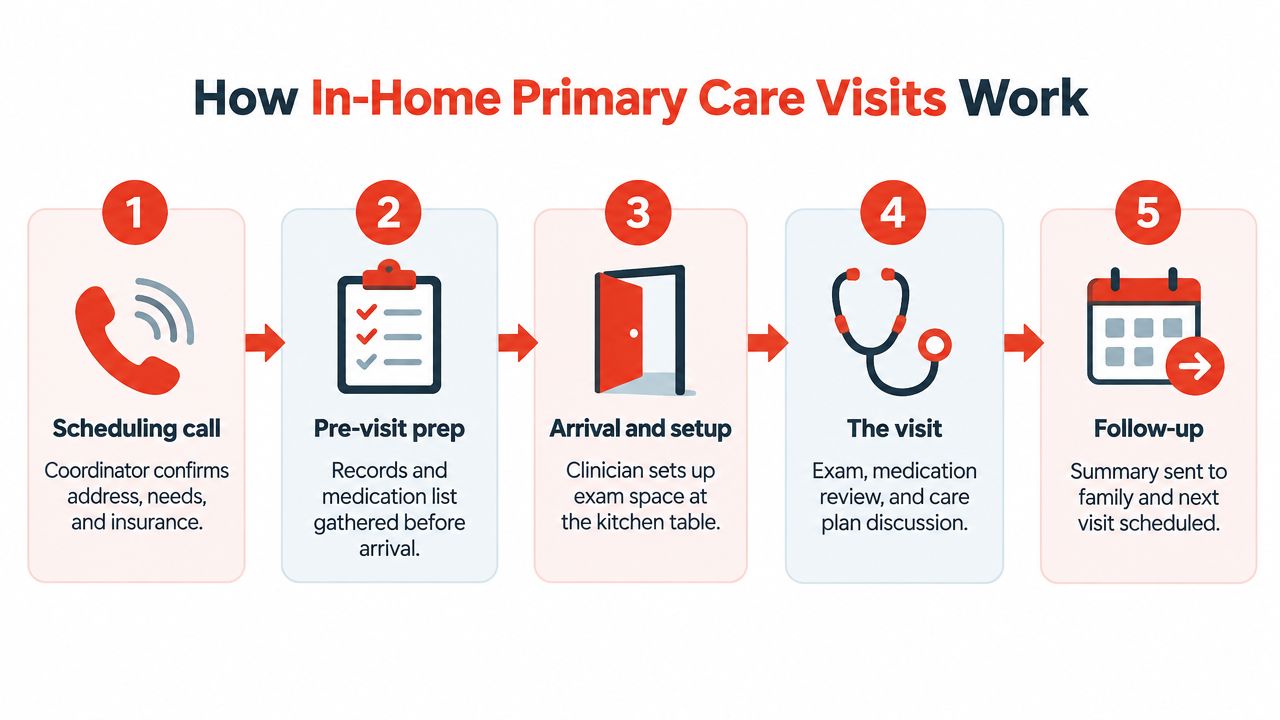
When the clinician arrives, the first minutes often involve conversation. The clinician may ask what has changed, how the patient spends a normal day, whether eating and sleeping have changed, and what the family is worried about. That opening provides context that can be difficult to obtain in a rushed examination room.
What happens during the assessment
The clinician may check vital signs, listen to the heart and lungs, examine the feet and skin, assess movement, and review medication bottles where they're stored. The home itself can reveal practical risks, such as loose rugs, poor lighting, cluttered walkways, or difficulty reaching the bathroom.
Depending on the practice and the clinical situation, point-of-care testing may include fingerstick blood tests, an EKG, or urinalysis. When ordered, mobile imaging services such as X-ray or ultrasound may be coordinated, while other tests may still require travel to a laboratory or facility.
The visit ends with a care plan explained in plain language. Instructions may be written down, prescriptions sent electronically, and referrals or laboratory orders arranged. The clinician may schedule the next visit before leaving and communicate with specialists or family members afterward.
A short video can help families visualize the general rhythm of a house call:
The exact workflow varies by practice. Ask who handles urgent questions, how results are delivered, and which services can be completed in the home.
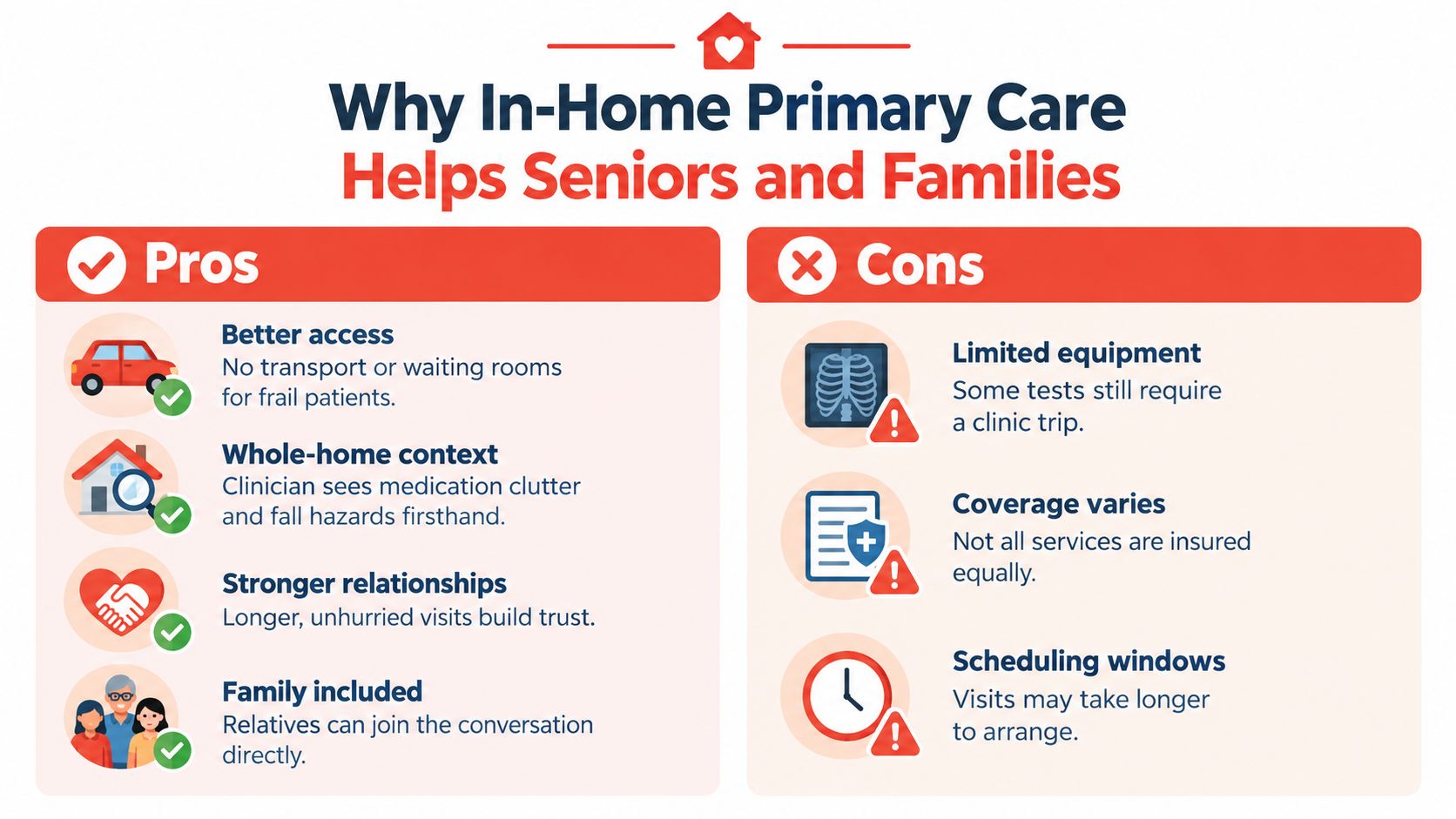
Why In-Home Primary Care Helps Seniors and Families
The strongest argument for in-home primary care is access. Historically, home-based medical care reached only a small share of homebound older adults. One study found that between 2011 and 2017, about 5% of older Medicare fee-for-service beneficiaries received any home-based medical care during follow-up, and in 2017 only 11% of an estimated 4.4 million homebound beneficiaries received it, according to Health Affairs research on home-based medical care.
The same research reported that recipients averaged 7.74 home-based visits per year, showing that this model can support an ongoing relationship rather than a one-time appointment. The access problem is larger than transportation alone. Reviews estimate roughly 2 million older adults in the United States are effectively homebound, while another 5 million have difficulty leaving home without help, and fewer than 12% of completely homebound people report receiving primary care at home, as summarized in the same source.
What the evidence supports
Home-based primary care can help clinicians see medication confusion, fall hazards, food access, caregiver strain, and changes in function. It can also reduce the burden on an adult child who would otherwise arrange transportation, take time off work, and manage several separate appointments.
A comparative study found a 17.9% lower hospitalization rate, with a number needed to treat of 6, among patients receiving home-based primary care, along with higher satisfaction with care, reported as an effect size of 0.74 in the comparative home-based primary care study. The study found no significant change in emergency department visits or quality-of-life scores, so families shouldn't expect every outcome to improve automatically.
A systematic review found that 8 of 9 home-based primary care programs affected at least one outcome, with programs often reducing emergency department visits, hospitalizations, long-term care admissions, or costs. In veteran populations, one review reported hospitalization prevalence falling from 40.6% to 25.0% over 6 months, emergency department use from 24.6% to 18.0%, and combined VA and Medicare costs decreasing by 17.5%, as described in the systematic review of home-based primary care.
These results support home visits as a stabilizing layer for complex older adults. They don't eliminate the need for hospitals, specialists, imaging centers, or emergency care when those services are appropriate.
Choosing the Right Option for Your Family
Start with the older adult's actual day, not the practice's marketing language. Can the person get dressed, travel, wait, communicate, and return home without excessive fatigue or risk? Does a caregiver have the time and transportation to make office visits reliable?
Use these questions when calling a practice:
- Ask about mobility: Does the practice make house calls for patients who can't travel safely?
- Confirm the core services: Are wellness visits, chronic disease management, medication reviews, and post-hospital follow-up included?
- Identify the clinician: Who will provide the visit, and will the same clinician return when possible?
- Clarify urgent care: How are same-day concerns handled, and what happens on weekends?
- Check caregiver communication: Can an authorized family member join by phone or receive care-plan updates?
- Review dementia experience: How does the practice support patients with memory loss or changing decision-making capacity?
- Understand records: Can the practice share notes, referrals, and results with specialists and caregivers?
- Ask about coverage: Which services are covered by the patient's Medicare plan, Medicare Advantage plan, or other insurance?
Be cautious if a practice can't explain who handles follow-up, has consistently long waits, offers no clear after-hours pathway, or has little experience with dementia and frailty. Coverage also varies, and some diagnostic services may still require a facility visit.
For families in northern and central New Jersey, Life Primary Care provides primary care house calls, chronic disease management, Medicare Annual Wellness Visits, post-hospital transitional care, geriatric and dementia care, palliative care, urgent non-emergency visits, in-home labs and EKGs, and coordination of mobile imaging. Its clinicians care for patients in homes, apartments, family residences, and assisted living communities across Morris, Essex, Union, Somerset, Passaic, and Bergen counties.
If an older adult is struggling with travel, medication coordination, or follow-up after hospitalization, review the available care setting with the family and ask whether in-home primary care fits the situation. Visit Life Primary Care to learn how its clinicians deliver ongoing senior primary care directly in patients' homes across New Jersey.
Ready for a visit at home?
Call and speak with a real person. We will confirm your insurance, find a time and come to you.
973-607-4911 Call now