
Guide · 12 min read
Palliative Care Is What Seniors Need to Know in 2026
Palliative care is specialized supportive care for people of any age facing serious or life-threatening illness, and it works alongside treatment intended to control or cure the disease. The World Health Organization estimates that 56.8 million adults and children need palliative care each year, yet only about 14% receive it.
A family may hear “palliative care” after a parent's heart-failure admission, during cancer treatment, or when dementia has made ordinary routines difficult. The word can trigger fear: Does this mean hospice? Are doctors stopping treatment? Is someone dying? Those questions are understandable, especially when everyone is already tired from appointments, medication changes, and urgent decisions.
For seniors in New Jersey, palliative support can also be coordinated through in-home primary care. Visiting physicians NJ families may already use for chronic illness, post-hospital follow-up, or mobility problems can help address symptoms and care goals where the patient lives. The important distinction is simple: palliative care adds support during serious illness, while hospice is a more specific model for the final stage when the treatment plan has shifted primarily to comfort.
Table of Contents
- Palliative Care Is What - The Missing Piece in Senior Care
- Defining Palliative Care Beyond End-of-Life
- Palliative Care vs Hospice Care
- In-Home Palliative Services for Seniors
- Benefits of Early Palliative Integration
- Next Steps for Families in New Jersey
Palliative Care Is What - The Missing Piece in Senior Care
“Palliative care” and “hospice” are often used as if they mean the same thing. A daughter may call a doctor after her mother's heart-failure symptoms worsen and say, “We aren't ready for hospice.” In many cases, that answer reflects a misunderstanding. The family may be ready for help with breathlessness, medication confusion, caregiver stress, and difficult decisions, even though the patient is continuing disease-directed treatment.
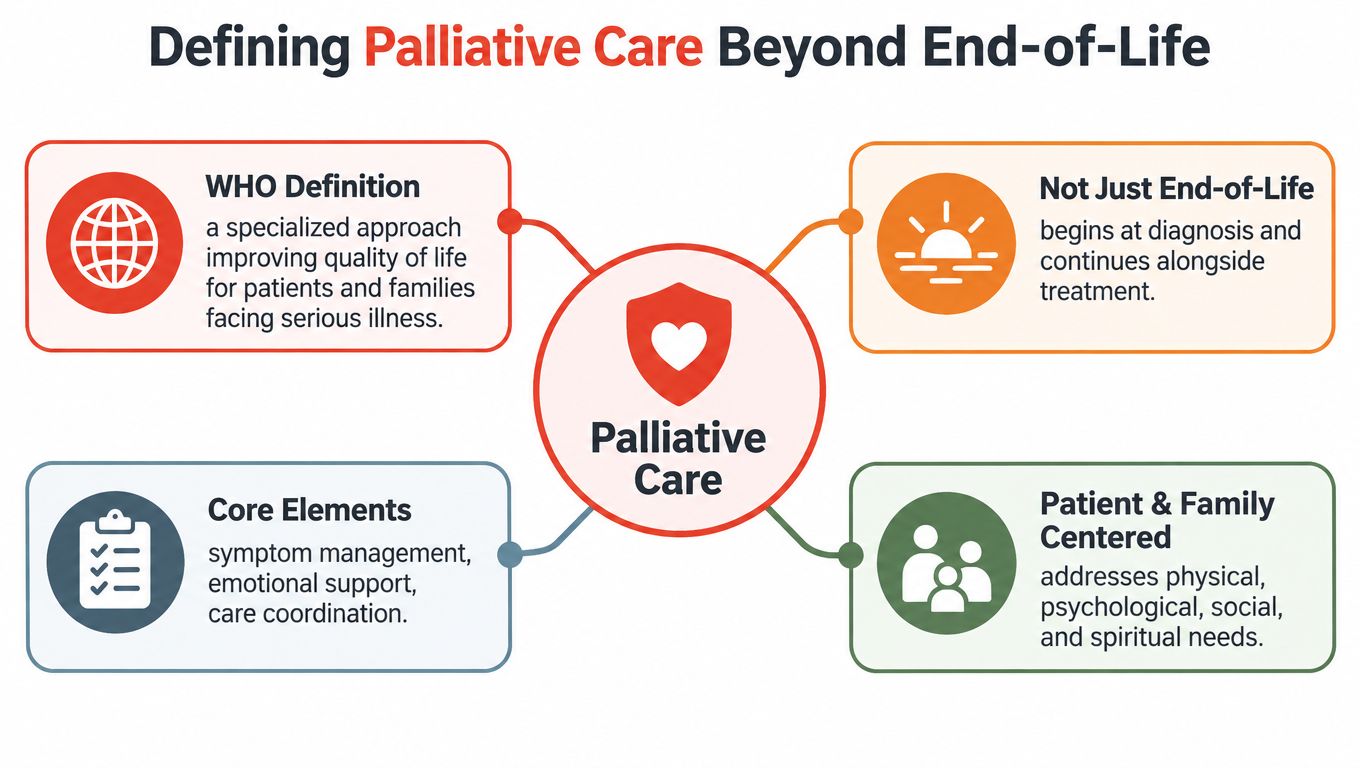
The World Health Organization's definition of palliative care describes specialized care that improves quality of life for patients and families facing serious illness. It focuses on preventing and relieving suffering through early identification, careful assessment, and treatment of pain and other physical, psychosocial, and spiritual problems. That is broader than end-of-life care, and it isn't restricted to cancer.
A senior receiving dialysis, chemotherapy, heart-failure treatment, or COPD management may still receive palliative care. The palliative team can review symptoms, clarify what matters to the patient, support family caregivers, and coordinate with the clinicians treating the underlying condition. It doesn't automatically replace the cardiologist, oncologist, nephrologist, or primary-care clinician.
Why the confusion matters
Waiting for a crisis can leave families trying to make decisions while a loved one is in pain, short of breath, confused, or unable to explain preferences. Earlier conversations give the care team time to understand the patient's priorities and create a plan that can change as the illness changes.
For a homebound older adult, a clinician may also see problems that an office visit misses. Medication bottles may be scattered across rooms, stairs may make bathing unsafe, or a caregiver may be managing more than they can sustain. Palliative care is not a signal to stop living or stop treating illness. It is a way to make serious-illness care more coordinated, tolerable, and personal.
Defining Palliative Care Beyond End-of-Life
The phrase “palliative care is what” deserves a direct answer. It is a person-centered clinical approach for reducing suffering and improving quality of life for someone with serious illness and for the people who support them. The WHO definition includes physical symptoms, but it also recognizes psychological, social, and spiritual concerns.
That broader view changes the questions clinicians ask. Instead of focusing only on pain scores, a team may ask whether a patient can sleep, eat, walk safely, understand the medication plan, remain connected to family, or make decisions without feeling overwhelmed. A caregiver's exhaustion and uncertainty also matter because family capacity affects whether a care plan can work at home.
What the approach includes
Palliative care may involve repeated symptom assessment, medication optimization, advance-care planning, communication about goals, caregiver support, and coordination with disease-directed treatment. For someone with COPD, that could mean discussing breathlessness and activity limits. For someone with dementia, it might include reviewing comfort, nutrition, falls, cognition, and the caregiver's ability to manage daily care.
The service can begin at different points in the illness journey. It may be introduced near diagnosis, during a difficult treatment period, after hospitalization, or when symptoms become harder to control. The patient doesn't need to be in the final days of life, and the diagnosis doesn't need to be cancer.
A major development in the history of palliative care came in 1986, when WHO promoted its cancer pain-relief framework and three-step analgesic ladder. In 2002, WHO broadened its definition to emphasize quality of life, family support, and multidimensional suffering, rather than focusing only on incurable disease or pain. These changes reflect how clinicians now understand supportive care as a continuing layer, not a last-minute intervention.
What a first conversation may cover
A first visit typically centers on the patient's experience and priorities. The clinician may ask:
- What feels hardest today: Pain, nausea, fatigue, breathlessness, anxiety, sleep, or loss of independence can all shape the plan.
- What treatment is doing: The team can review benefits, burdens, side effects, and unanswered questions without making decisions for the patient.
- Who is helping at home: Caregiver availability, medication access, transportation, and the physical environment affect safe follow-through.
- What matters most: Priorities may include staying home, attending family events, maintaining function, or avoiding treatments that create more burden than benefit.
Palliative care can support decision-making, but it doesn't remove the patient's voice or substitute for consent. The aim is proportional care aligned with the person's values, with the plan revisited as health, symptoms, and priorities change.
Palliative Care vs Hospice Care
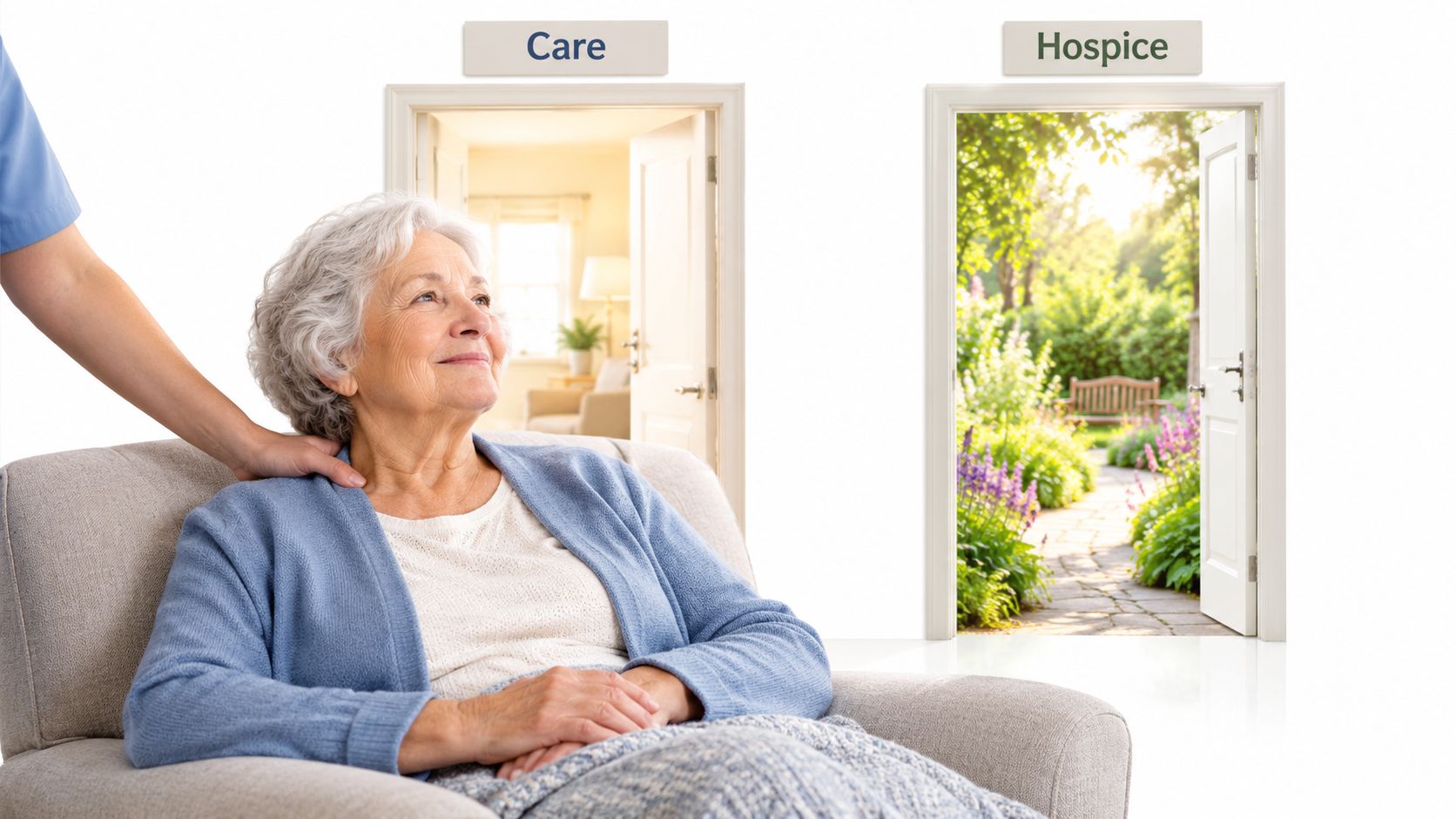
The clearest difference is timing and treatment intent. Palliative care can accompany disease-directed treatment at any stage of serious illness. Hospice is a specific form of comfort-focused care for people whose illness is considered terminal and who meet applicable eligibility requirements. Families should confirm current eligibility and coverage with the patient's clinicians, hospice provider, and insurer.
| Feature | Palliative Care | Hospice Care |
|---|---|---|
| Timing | Can begin at diagnosis or any stage of serious illness | Generally begins when illness is advanced and the plan has shifted primarily to comfort |
| Treatment goals | Supports comfort and quality of life alongside treatment intended to control or cure illness | Prioritizes comfort when life-prolonging treatment is no longer effective, desired, or consistent with the care plan |
| Eligibility | Not limited by a six-month prognosis | Typically requires certification that the patient has a terminal prognosis of six months or less if the illness follows its usual course |
| Existing clinicians | Adds support and coordinates with the current medical team | Provides an organized hospice plan and interdisciplinary support |
| Location | Hospital, clinic, outpatient setting, or home, depending on the program | Home, assisted living, nursing facility, hospital, or hospice facility, depending on the program |
| Family support | Counseling, education, communication, and care coordination vary by program | Includes structured support for the patient and family under the hospice benefit, subject to applicable rules |
A patient can receive palliative care while continuing chemotherapy, dialysis, heart-failure therapy, or COPD treatment. Hospice may include selected treatments when they fit the comfort-focused plan, but the patient and hospice team determine what belongs in that plan.
Families sometimes encounter similar terminology outside human medicine. A careful explanation of the distinction between supportive care and end-of-life care for animals can be found in this resource on palliative vs hospice care for pets from Heartstrings Pet Hospice & In-Home Euthanasia. For human care decisions, families can also review this guide to the difference between hospice and palliative care.
Practical rule: Asking for palliative care doesn't commit a patient to hospice. It opens a conversation about symptoms, support, and goals.
In-Home Palliative Services for Seniors
Palliative care at home makes the most sense when the clinician can connect symptoms with the patient's real daily environment. An older adult may describe “weakness,” but a home visit can reveal that the problem began after a medication change, that the walker doesn't fit through the bathroom doorway, or that a caregiver is dividing tablets because the written instructions are confusing.
A home-based visit can include a history, physical examination, treatment planning, medication review, and communication with other clinicians. For seniors with diabetes, heart failure, COPD, hypertension, chronic kidney disease, or high cholesterol, palliative support can sit alongside chronic-disease management rather than replacing it.
Life Primary Care is one New Jersey example of an in-home primary-care practice that provides primary care house calls, chronic disease management, geriatric care, urgent visits, diagnostics, and palliative care. Its clinicians care for patients in homes, family residences, apartments, and assisted-living communities across Morris, Essex, Union, Somerset, Passaic, and Bergen counties.
What clinicians can assess at home
The visit should connect medical decisions to practical realities. Common areas of review include:
- Symptoms: Pain, breathlessness, nausea, fatigue, constipation, anxiety, and sleep problems may require ongoing tracking and clinician-directed adjustments.
- Medication safety: A thorough review across prescribers can identify duplications, interactions, missed doses, and medicines that no longer fit the patient's goals.
- Function and cognition: Walking, eating, bathing, memory, falls, and the ability to understand instructions help the team judge whether the plan is manageable.
- Caregiver capacity: The clinician can ask who provides help, what tasks are becoming difficult, and whether additional services or clearer instructions are needed.
- The home environment: Stairs, bathroom setup, oxygen use, fall hazards, and access to food or medication can influence comfort and safety.
A palliative home visit may also address advance-care planning, communication with specialists, symptom monitoring, caregiver education, and follow-up after a hospitalization. It isn't a substitute for emergency services when a life-threatening emergency is occurring, and families shouldn't delay emergency care for urgent, severe symptoms.
For readers comparing supportive approaches for chronic illness, resources such as holistic chronic illness counseling Sarasota from Be Your Best Self & Thrive Counseling, PLLC, may offer a complementary perspective on emotional and behavioral support. Human medical care still requires coordination with the patient's clinicians.
Families can learn more about the practical experience in this guide to palliative care at home. The most useful plan is one the patient and caregiver can understand, access, and follow.
Benefits of Early Palliative Integration
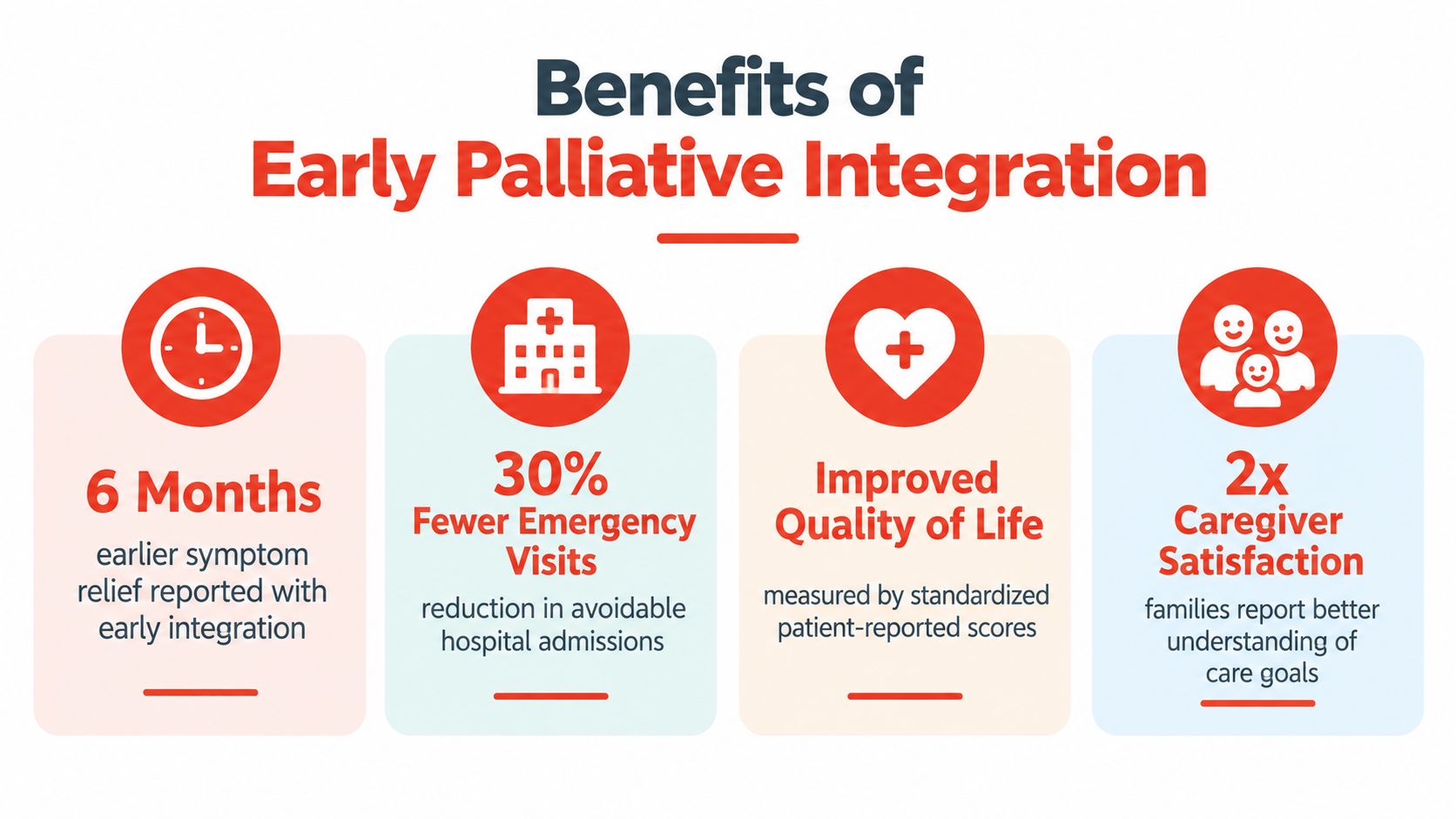
A family may still be driving to appointments, filling pillboxes, and trying to keep daily life steady, yet the strain is already building. Pain flares, fatigue lingers, a new medication causes confusion, and no one is sure which change matters enough to report. Bringing palliative care in early gives patients and caregivers support while treatment is still ongoing, which is why it is often better understood as parallel care, not a last stop.
That timing matters. When symptoms, side effects, and worries are addressed before they pile up, families have more room to think clearly and make decisions without the pressure of a crisis. For New Jersey seniors receiving care at home, this can fit naturally alongside in-home primary care and specialist treatment, adding another layer of guidance instead of replacing existing doctors.
Evidence supports quality-of-life benefits, though results differ by diagnosis, care intensity, and delivery model. In a 2024 randomized clinical trial of 144 patients with advanced cancer, early palliative-care integration produced a statistically significant quality-of-life improvement at 18 weeks, with a between-group change of 11.00 points on the study's health-status and quality-of-life scale, a 95% confidence interval of 0.78 to 21.22, and an effect size of 0.42 (JAMA Network Open).
What early support can change
Quality of life is only part of the picture. Early support can make care feel less confusing by helping families know which symptoms need a same-day call, how medications should be taken, what changes to watch for after treatment, and who is responsible for each part of the plan. That kind of clarity often eases caregiver stress because instructions are more specific and follow-up is more predictable.
For homebound seniors, this support is often practical and ongoing. Scheduled home visits and phone follow-up can help with symptom tracking, medication reconciliation, caregiver coaching, and timely plan changes after a hospitalization or a drop in function. The palliative clinician may also coordinate with specialists, arrange testing, or sort out recommendations when several medical teams are involved.
The trial did not show a statistically significant overall-survival difference. Even when some findings suggest possible survival patterns in certain subgroups, families should not hear palliative care as a promise about time. The more reliable reasons to start earlier are immediate ones: better symptom relief, clearer communication, more prepared caregivers, and treatment choices that stay closer to what the patient wants.
Early palliative care improves how care is lived day to day while treatment decisions are still being made.
Next Steps for Families in New Jersey
Start with a direct question to the primary-care clinician or specialist: “Could palliative care help with symptoms, caregiver support, or treatment decisions while we continue current care?” Families don't need to wait until pain is uncontrolled or a hospitalization occurs. They can ask what services are available at home, who will coordinate with existing specialists, and what the first visit will cover.
For a homebound senior, Medicare describes homebound status by the difficulty and effort required to leave home, not solely by age. A person may qualify as homebound when illness or injury makes leaving home difficult without a cane, wheelchair, walker, crutches, special transportation, or another person, or when leaving home isn't recommended because of the person's condition (Medicare's home health guide). Eligibility for a particular benefit still depends on the applicable certification and service rules.
Make the first conversation useful
Bring a current medication list, recent discharge paperwork, specialist names, and a short record of the symptoms that interfere most with daily life. Write down what the patient wants to preserve, such as remaining at home, walking to the mailbox, attending religious services, or avoiding burdensome trips.
Families can also begin conversations about future planning before a crisis forces rushed decisions. Ask who should speak for the patient if they can't communicate, which treatments feel acceptable, and how the family will recognize a meaningful change in health. These discussions can be revisited; they aren't permanent orders about every future situation.
After a hospital discharge, prompt follow-up matters. CMS defines transitional care management around a 30-day operating window, beginning on the discharge day and continuing through the next 29 days, for qualifying Medicare patients and settings (CMS transitional care management guidance). Medication review, reconciliation of discharge instructions, and coordination of follow-up during that first month can help families understand what happens next, with coverage and billing subject to CMS requirements.
Families considering home-based services can also review whether palliative care is covered by Medicare, then confirm the details with their plan and care team. Seeking support early isn't giving up. It is a practical step toward comfort, clearer choices, and care that fits the patient's life.
Life Primary Care offers in-home primary care, chronic disease management, medication reviews, diagnostics, transitional follow-up, and palliative support for serious illness across northern and central New Jersey. Visit Life Primary Care to learn whether a home visit could help your family coordinate care where your loved one lives.
Ready for a visit at home?
Call and speak with a real person. We will confirm your insurance, find a time and come to you.
973-607-4911 Call now