
Guide · 12 min read
Palliative Care Doctor: What It Is and When to Consult One
A parent with advanced cancer or heart failure may still be receiving active treatment, yet each week brings a new problem. Pain breaks through the medication plan, breathing becomes harder, meals are skipped, and sleep disappears. Meanwhile, the family caregiver is tracking pills, calling specialists, and wondering whether another emergency department visit is inevitable.
That situation doesn't mean treatment has failed, and it doesn't automatically mean hospice is the next step. It may mean that a palliative care doctor should join the care team. For New Jersey families arranging Visiting physicians NJ, Visiting Doctors NJ, or Doctor house calls NJ, the most important question is often practical: who will assess symptoms at home, adjust the plan, and respond when the patient worsens between visits?
Table of Contents
- Recognizing When Professional Comfort Care Is Needed
- What a Palliative Care Doctor Actually Does
- Palliative Care vs Hospice Care Understanding the Difference
- What Happens During an In-Home Palliative Care Visit
- Integrating Palliative Care With Ongoing Disease Treatment
- When to Consult a Palliative Care Doctor
- Operational Questions Families Should Ask Before Choosing Care
- Next Steps for New Jersey Families Seeking Palliative Care
Recognizing When Professional Comfort Care Is Needed
A daughter in northern New Jersey notices that her mother, who has advanced cancer, no longer finishes breakfast. Her mother says the pain is “manageable,” but she wakes repeatedly at night, moves less, and seems frightened by the shortness of breath that comes with walking to the bathroom. The daughter is sleeping poorly because she's organizing medications and deciding whether each new symptom requires a call to oncology, a primary-care office, or 911.
Families often describe this as an unavoidable part of aging or serious illness. It isn't. Persistent symptoms, growing caregiver strain, and uncertainty about what to do next are signals that the care plan needs another layer of professional support.
A palliative care doctor looks beyond a single symptom. The clinician considers pain, breathing, nausea, constipation, fatigue, mood, memory, mobility, medication effects, and the family's understanding of the illness. The visit may also uncover a practical problem, such as medicines being taken at the wrong time, oxygen equipment creating a fall hazard, or a caregiver trying to manage tasks that require clinical guidance.

The family doesn't have to choose between comfort and treatment. Palliative care can support cancer therapy, heart-failure treatment, dialysis, or pulmonary care while helping everyone understand the options. A plain-language overview of what comfort care means can help families begin the conversation before symptoms become a crisis.
What a Palliative Care Doctor Actually Does
A palliative care doctor is a physician who helps patients live with serious illness more comfortably and with clearer decisions. The work isn't limited to prescribing pain medicine. It combines symptom management, communication, medication review, emotional support, caregiver guidance, and coordination with the clinicians already treating the illness.
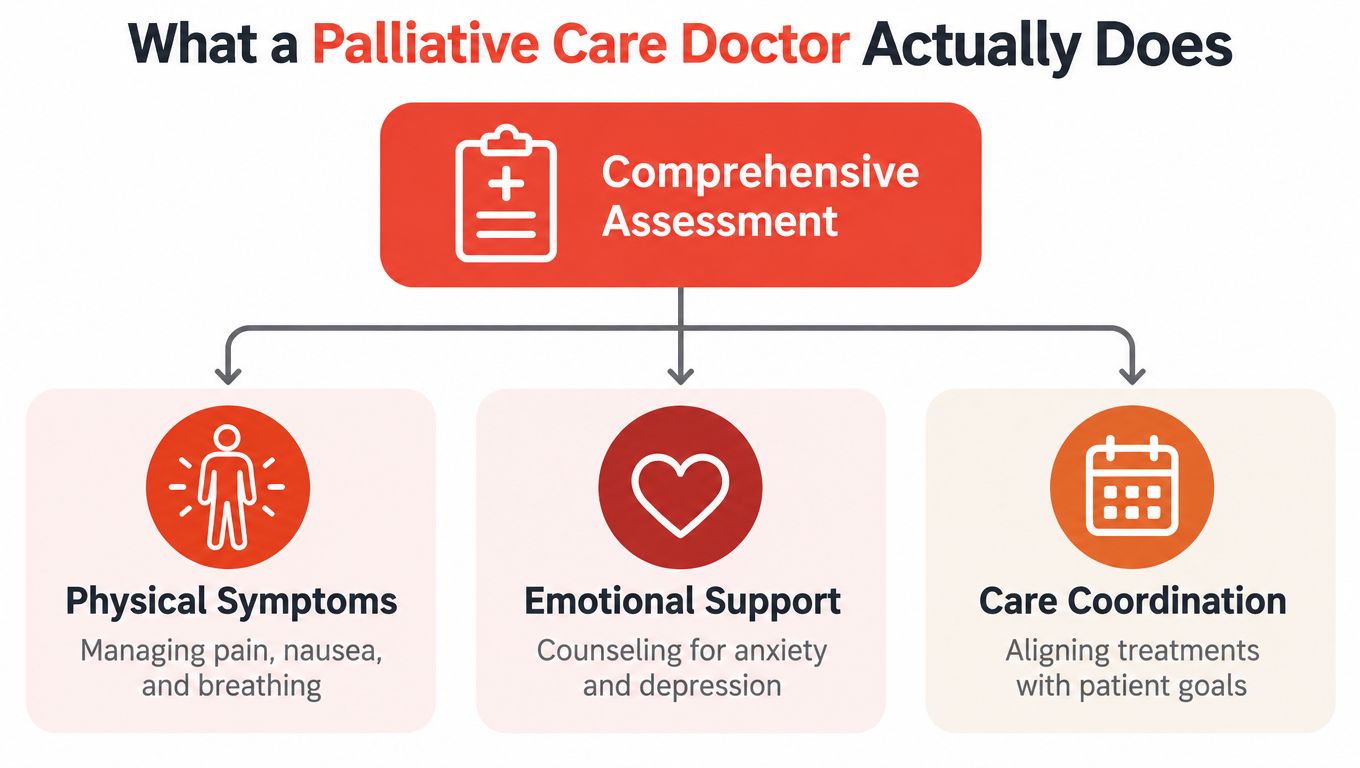
The assessment comes before the adjustment
During an evaluation, the doctor may ask about:
- Physical symptoms: Pain, fatigue, nausea, vomiting, appetite, bowel changes, and dyspnea can interact. Constipation may worsen discomfort, while sedation or medication burden may increase falls.
- Emotional and cognitive health: Anxiety, depression, delirium, confusion, and orientation affect both comfort and the patient's ability to participate in decisions.
- Daily function: The clinician looks at walking, bathing, eating, sleeping, and other activities to understand how the illness is changing everyday life.
- Caregiver capacity: A medication plan only works if someone can safely organize and administer it. Exhaustion, work obligations, and limited help matter clinically.
- Goals and preferences: The doctor discusses what the patient understands about the illness, which treatments feel worthwhile, who can make decisions if capacity changes, and where the patient would prefer to receive care.
These domains reflect the approach described by the Agency for Healthcare Research and Quality assessment guidance. A home visit adds information that a clinic may not reveal, including medication bottles, oxygen use, stairs, fall hazards, and whether the available caregiver support matches the plan.
For advanced cancer, the 2024 American Society of Clinical Oncology guideline recommends early referral to an interdisciplinary palliative care team alongside active cancer treatment, particularly when symptoms are uncontrolled or quality-of-life concerns are present. The doctor may recommend a medication review, non-drug comfort measures, rehabilitation, caregiver support, or a structured goals-of-care discussion. The plan is revisited as symptoms, function, prognosis, or treatment burdens change.
Practical rule: The palliative care doctor doesn't take over every decision. The clinician helps the patient, family, and existing medical team make decisions that fit the patient's condition and priorities.
Palliative Care vs Hospice Care Understanding the Difference
Palliative care and hospice care both focus on comfort, dignity, and support for families, but they serve different situations. Palliative care can begin while a patient continues disease-directed treatment. Hospice is a more specialized end-of-life service for a patient whose illness has reached a terminal stage and whose plan has shifted away from curative or disease-directed treatment.
| Aspect | Palliative Care | Hospice Care |
|---|---|---|
| When it begins | At any stage of a serious illness, including during active treatment | When the patient is approaching the end of life and the care plan centers on comfort |
| Disease-directed treatment | May continue chemotherapy, dialysis, heart-failure treatment, or other therapies | Usually requires a decision to stop treatments intended to control the underlying disease, subject to hospice rules |
| Main focus | Symptoms, quality of life, communication, caregiver support, and coordination | Comfort, dignity, family support, and end-of-life care |
| Where it can occur | Clinic, hospital, outpatient setting, long-term care, or home | Home, hospice facility, nursing facility, hospital, or another eligible setting |
| Who may receive it | People with serious illness who need added support, regardless of hospice readiness | Patients who meet hospice eligibility requirements and elect hospice services |
A person receiving chemotherapy may ask a palliative care doctor to help manage pain, nausea, fatigue, anxiety, or difficult treatment decisions. The oncologist continues directing cancer treatment, while the palliative team addresses suffering and helps the family understand what to expect.
A different patient may have decided that hospital transfers and burdensome treatments no longer match their goals. Hospice may then provide a coordinated end-of-life plan, equipment, nursing support, and family education according to the hospice program's rules.
The distinction affects access, payment, and the clinicians involved, so families should ask their insurer and prospective provider how services are covered. They can also review this guide to the difference between hospice and palliative care before making assumptions.
What Happens During an In-Home Palliative Care Visit
An in-home visit usually begins with conversation, not a rushed checklist. The doctor asks the patient and caregiver what has changed, what feels hardest today, and what they hope will improve. The clinician then connects those answers with the medical record, medication list, recent hospital instructions, and the patient's day-to-day function.

What the clinician evaluates
The assessment may include:
- Pain and other physical symptoms: The doctor asks what the symptom feels like, when it appears, what worsens it, and how it affects sleep, movement, and eating.
- Breathing and energy: Dyspnea, fatigue, weakness, and reduced activity may reflect the illness, treatment effects, anxiety, or several problems at once.
- Mood and cognition: Depression, anxiety, delirium, and memory changes can alter safety and decision-making. A confused patient may need urgent evaluation rather than a simple medication change.
- Function and safety: The clinician considers transfers, walking, bathing, toileting, falls, oxygen use, and the patient's ability to manage daily tasks.
- Values and decisions: The conversation may cover treatment preferences, code status, the patient's understanding of prognosis, a healthcare proxy, preferred place of care, and what should happen during a crisis.
- Family and cultural needs: Religious or existential concerns, language preferences, family roles, and caregiver stress can shape a workable plan.
The home supplies clinical information that an office cannot. A doctor can see whether pill bottles match the discharge list, whether medicines are stored safely, whether a walker fits through the hallway, and whether the caregiver is available to help at the times the plan requires.
After the assessment, the clinician may reconcile medications, communicate with oncology or cardiology, arrange follow-up, document decision-makers, and provide written instructions for symptom changes. Families should ask which symptoms require a phone call, which require emergency services, and what information to keep available.
A short educational video can help families visualize how a home-based assessment may work:
The visit isn't a promise that every problem can be managed at home. It's a way to create a realistic plan based on the patient's condition, home environment, available support, and treatment goals.
Integrating Palliative Care With Ongoing Disease Treatment
Palliative care doesn't mean stopping medical treatment. A patient may continue chemotherapy, dialysis, heart-failure management, COPD treatment, or another disease-directed plan while receiving help with symptoms and difficult decisions.
Consider a person with cancer whose pain remains uncontrolled during treatment. The palliative care doctor may review how the patient is taking prescribed medicines, identify side effects, communicate with the oncology team, and consider appropriate changes within the overall treatment plan. The purpose is not to replace oncology. It's to reduce suffering that the cancer treatment team may not have time to address in depth.
For someone with heart failure, shortness of breath may coexist with medication burden, weakness, poor appetite, and repeated hospital visits. Palliative care can help the patient and cardiology team discuss which treatments support the patient's priorities, how to respond to worsening symptoms, and what level of monitoring is realistic at home.
A person with COPD may need pulmonary rehabilitation, inhaler review, oxygen assessment, and support for anxiety linked to breathlessness. Palliative care can coordinate those needs while the pulmonary clinician continues disease management.
The World Health Organization describes palliative care as relevant to serious conditions including cancer, heart disease, dementia, chronic lung disease, and kidney disease. Its palliative care fact sheet also explains that the need extends beyond the final days of life, which is why families shouldn't wait until every disease-directed option has ended.
The evidence also calls for honest expectations. A large randomized trial involving seriously ill older adults found that automatically arranging palliative-care consultation did not significantly reduce hospital length of stay, so families shouldn't view palliative care as a guaranteed way to shorten hospitalization. Its value lies in individualized symptom relief, communication, care coordination, and decisions that reflect the patient's goals.
When to Consult a Palliative Care Doctor
The need often becomes clear through a pattern rather than one dramatic event. A parent with heart failure becomes short of breath after small activities, then returns to the hospital. A spouse with dementia develops agitation and sleep disruption. A person with kidney disease feels overwhelmed by appointments and can't explain which treatments still feel acceptable.
Common reasons to request a consultation include:
- Symptoms remain uncontrolled: Pain, nausea, constipation, anxiety, fatigue, or breathlessness continues despite the current plan.
- Hospital or emergency visits repeat: The family keeps responding to crises without a clear plan for what to do at home.
- Treatment goals conflict: The patient wants comfort and time at home, while relatives disagree about hospitalization or additional procedures.
- Function declines: The person needs more help with walking, bathing, eating, or taking medication.
- The caregiver is exhausted: One person is carrying medication management, transportation, supervision, and communication with several specialists.
- A serious diagnosis changes daily life: New cancer, advanced heart failure, COPD, dementia, or kidney disease may create needs that exceed routine follow-up.
A referral doesn't force the patient to choose hospice or sign an advance directive. It creates space to ask questions while the patient can still express preferences. Families may also need legal planning alongside medical conversations, and a resource on guardianship and end-of-life decisions can help them identify questions for an attorney, even though laws differ by state.

For advanced cancer, early specialist involvement is recommended when symptoms or quality-of-life concerns are present. For other illnesses, timing depends on the patient's needs, the available program, and the family's readiness. You don't need to wait for a crisis to ask whether palliative care belongs on the care team.
Operational Questions Families Should Ask Before Choosing Care
The phrase “home-based palliative care” doesn't automatically tell you what happens at night or during a sudden change. A family needs to understand the operating model before relying on it for serious illness.
Ask the provider:
- Who answers after hours? Is there access to a prescribing clinician, or does the service only take messages for the next business day?
- Who can change medication orders? Find out whether the responding clinician has authority to prescribe or whether the family must call another office.
- What happens if pain or breathing suddenly worsens? Ask for specific instructions about phone triage, urgent home assessment, and when to call emergency services.
- How does the team coordinate? The service should explain how it communicates with primary care, oncology, cardiology, nephrology, home health, hospice, and the hospital.
- What happens after discharge? Ask whether the team reviews hospital instructions, reconciles medications, and communicates changes to the regular doctor.
- What should caregivers do themselves? A reliable program gives families understandable instructions for monitoring symptoms, taking medicines safely, and reporting changes.
- When does the service end or transition? Ask about discharge criteria, hospice transitions, changes in insurance, and relocation to a facility.
The 2025 CAPC standards for home-based palliative care specify that community programs should provide 24/7 access to a prescribing clinician, maintain access to the medical record, coordinate with other services, educate patients and caregivers for self-management, and establish clear transition or discharge criteria.
Ask for the workflow, not just the promise. A program should be able to tell you who responds, how quickly the response begins, what information the clinician can see, and when the family should use emergency services.
Families should also ask how the service handles insurance verification and whether the proposed visit is palliative care, in-home primary care, home health, or another category. This guide to palliative care coverage through Medicare can help frame those questions, but coverage and eligibility still need to be confirmed for the individual patient.
Next Steps for New Jersey Families Seeking Palliative Care
Start with the patient's current needs, not with the label attached to a service. Write down the symptoms that interfere with sleep, eating, movement, or communication. Gather medication bottles, discharge paperwork, specialist contact information, and the patient's known wishes about hospitalization and treatment.
For families in northern and central New Jersey, these questions can make the first call more productive:
- Does the clinician provide in-home palliative care?
- Can the service work alongside oncology, cardiology, nephrology, pulmonology, primary care, home health, or hospice?
- Who responds to urgent calls outside regular visits?
- Does the provider review medications in the home?
- How are insurance eligibility, referrals, and follow-up handled?
- What happens after a hospital discharge?
- Which counties and living settings are served?
Medicare's home health rules are separate from ordinary physician house calls and in-home primary care. A patient generally must meet specific homebound criteria for covered home health, and Medicare requires a qualifying provider, a reviewed care plan, certification, and an ordered service from a Medicare-certified agency. Families should verify the exact benefit rather than assume that every home medical visit is covered under home health.
Palliative care is a longitudinal discipline. It can start while treatment continues, respond to changing symptoms, and help families make decisions before a crisis. A home visit also gives the clinician information about medication use, safety, caregiver capacity, and the feasibility of the patient's preferred care setting.
Life Primary Care offers in-home primary care and palliative care visits for serious illness, including symptom assessment, medication review, chronic disease management, and coordination with outside specialists across northern and central New Jersey. Visit Life Primary Care to learn whether an in-home clinician can help your family create a clearer comfort and treatment plan.
Ready for a visit at home?
Call and speak with a real person. We will confirm your insurance, find a time and come to you.
973-607-4911 Call now