
Guide · 14 min read
Chronic Kidney Disease Management: A Practical Guide

An older parent leaves a clinic visit with “chronic kidney disease” added to the chart, several lab orders in hand, and more appointments competing for space on the calendar. The family may understand that the kidneys aren't working perfectly, but still wonder what the diagnosis means, which medicines matter, what to eat, and how anyone will keep track of it all when getting to the office is difficult.
Chronic kidney disease management is a long-term process, not a single prescription. The practical plan usually combines kidney and heart protection, repeat laboratory testing, medication review, blood-pressure and blood-sugar control, individualized nutrition, attention to warning signs, and coordination among primary care, nephrology, pharmacy, caregivers, and home-based services.
Table of Contents
- Why Chronic Kidney Disease Management Looks Different From The First Appointment
- Understanding CKD Staging and What The Numbers Actually Mean
- Monitoring Kidney Labs at Home Between Visits
- Kidney-Protective Medications and What Patients Should Never Adjust Alone
- Controlling Blood Pressure and Blood Sugar to Slow Kidney Decline
- Eating Well With CKD When Appetite and Frailty Are Part Of The Picture
- Red Flags and When To Ask For A Nephrology Referral
- How In-Home Primary Care Supports Ongoing CKD Management
Why Chronic Kidney Disease Management Looks Different From The First Appointment
The first appointment often focuses on naming the problem. Ongoing care focuses on watching its direction. A clinician needs to know whether kidney function is stable, gradually changing, or shifting quickly because of dehydration, infection, medication effects, uncontrolled blood pressure, or another illness.
The two broad aims are preserving remaining kidney function and reducing cardiovascular risk. CKD can progress without any early warning signs, and it often exists alongside diabetes, hypertension, heart disease, frailty, and complex medication lists. The World Health Organization's kidney disease overview describes CKD as a major global health burden requiring early and continuous management, not care only after kidney failure develops.
The seven parts of a workable plan
A useful plan connects seven areas:
- Staging: Understand eGFR and urine albumin results together.
- Laboratory monitoring: Repeat tests often enough to identify meaningful change.
- Medication safety: Review kidney-protective medicines, over-the-counter products, and prescriptions from every clinician.
- Blood pressure and blood sugar: Control the two major drivers of kidney injury without creating low readings or hypoglycemia.
- Diet and daily habits: Adapt food and fluid decisions to appetite, weight, potassium, swelling, and personal goals.
- Red flags and referral: Know when a symptom or lab change requires prompt attention or nephrology input.
- In-home primary care: Build a system that works for someone who can't reliably travel to an office.
For a primary care practice, reliable documentation and follow-up matter just as much as the visit itself. A resource such as Virtual Assistants for Primary Care can support administrative and documentation workflows, helping clinical teams keep laboratory results, medication lists, referrals, and follow-up tasks organized.
Practical rule: A CKD plan should answer three questions: What is the kidney function today? Is it changing? Who will act when the results or symptoms change?
For an older adult with limited mobility, management may involve a blood draw at home, a urine sample collected in the bathroom, a caregiver photographing medication bottles, and a clinician reviewing the results by phone. That isn't a lesser version of care. It can be the most realistic way to make continuous care dependable.
Understanding CKD Staging and What The Numbers Actually Mean
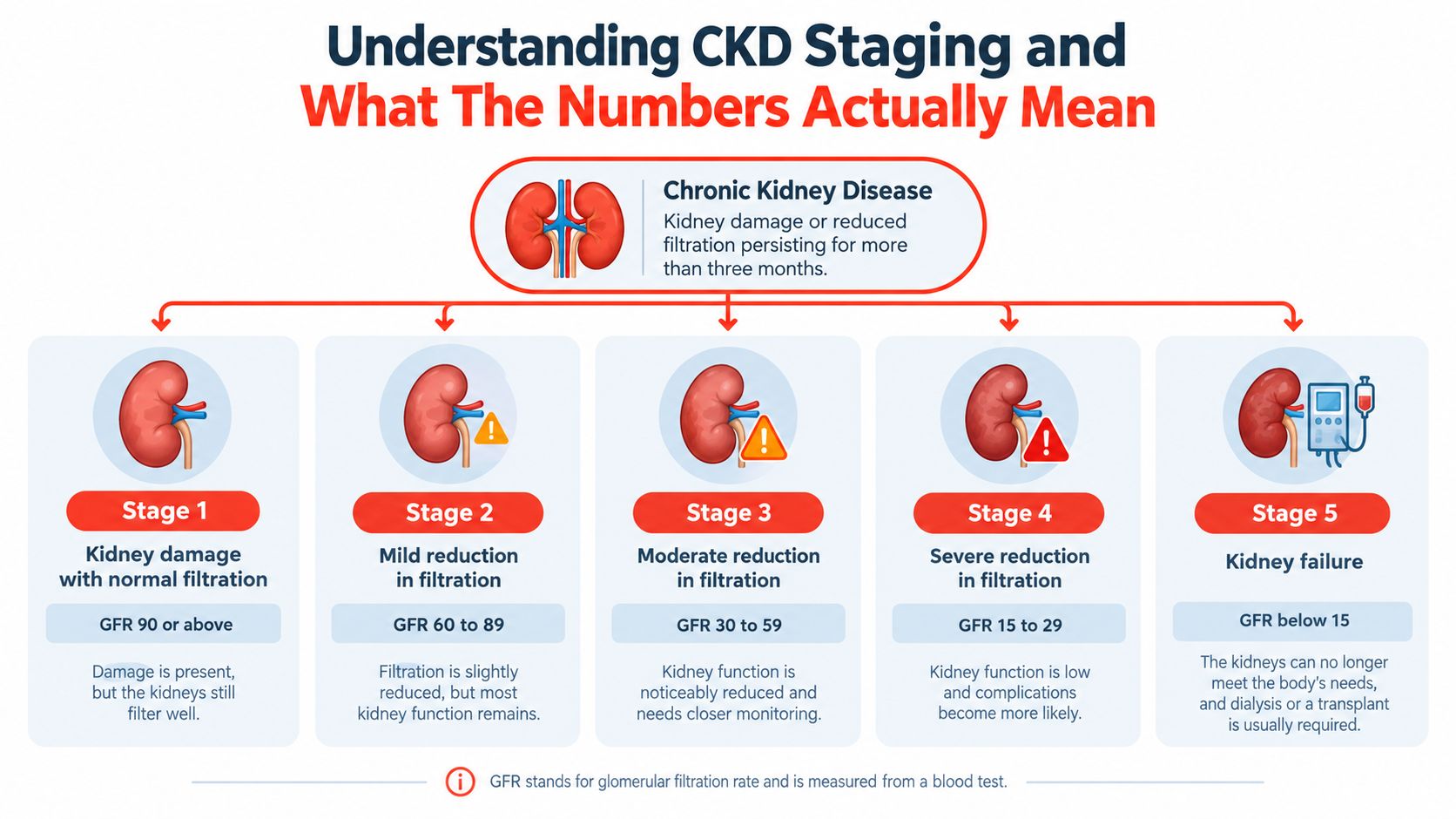
Think of the kidneys as filters connected to the body's plumbing. eGFR estimates how much blood the filters can process, while urine albumin shows whether the filter walls are becoming leaky. An abnormal result matters, but a single abnormal result doesn't establish chronic kidney disease.
CKD generally means kidney damage or reduced kidney function that persists for more than three months. The National Institute of Diabetes and Digestive and Kidney Diseases explanation of CKD evaluation describes eGFR as an estimate calculated from a stable serum creatinine level and urine ACR as a measure of albumin loss through the kidneys.
Read the two measurements together
eGFR is the filtration estimate. In broad terms, G1 represents an eGFR of 90 or above, G2 is 60 to 89, G3 is 30 to 59, G4 is 15 to 29, and G5 is below 15. These categories describe filtration, but they don't tell the whole story by themselves.
ACR is the albumin warning signal. A urine albumin-to-creatinine ratio above 30 mg/g is commonly used as a marker of kidney damage. A person may have an eGFR that looks preserved while still having albumin in the urine, just as a household filter may still allow water through while its walls begin to leak.
Clinicians combine the G category with the A category to estimate risk. A lower eGFR generally signals less filtration reserve, while more albumin suggests more kidney damage and often greater cardiovascular risk. Ask which G and A categories apply, whether the sample needs repeating, and how the combined result changes the monitoring plan.
Avoid two common interpretations
An eGFR isn't a direct measurement of every kidney function. It is an estimate influenced by creatinine and the clinical context, so dehydration, acute illness, muscle mass, and some medicines can affect interpretation.
Likewise, albumin in one urine sample may not prove persistent kidney damage. The right response to an unexpected result is neither panic nor dismissal. Ask when the test should be repeated and whether the result was obtained during illness, after unusual exertion, or after a medication change.
Monitoring Kidney Labs at Home Between Visits
Staging answers, “Where are we now?” Monitoring answers, “Is the situation staying steady?” That distinction matters for an older adult whose kidney function may be affected by poor intake, a stomach illness, a new prescription, or a hospital discharge.
KDIGO recommends measuring eGFR and urine ACR at least annually in adults with CKD, with more frequent testing when progression risk is higher or when a result could change treatment. The KDIGO-aligned discussion of kidney monitoring gives examples of different testing frequencies based on the combined eGFR and albuminuria risk category.
Track trends, not isolated values
A change in eGFR of more than 20% exceeds expected biological and laboratory variability and warrants evaluation. A doubling of ACR also exceeds expected variability. These findings don't automatically mean permanent progression. They may reflect acute kidney injury, dehydration, uncontrolled blood pressure, infection, adherence problems, or a medication effect.
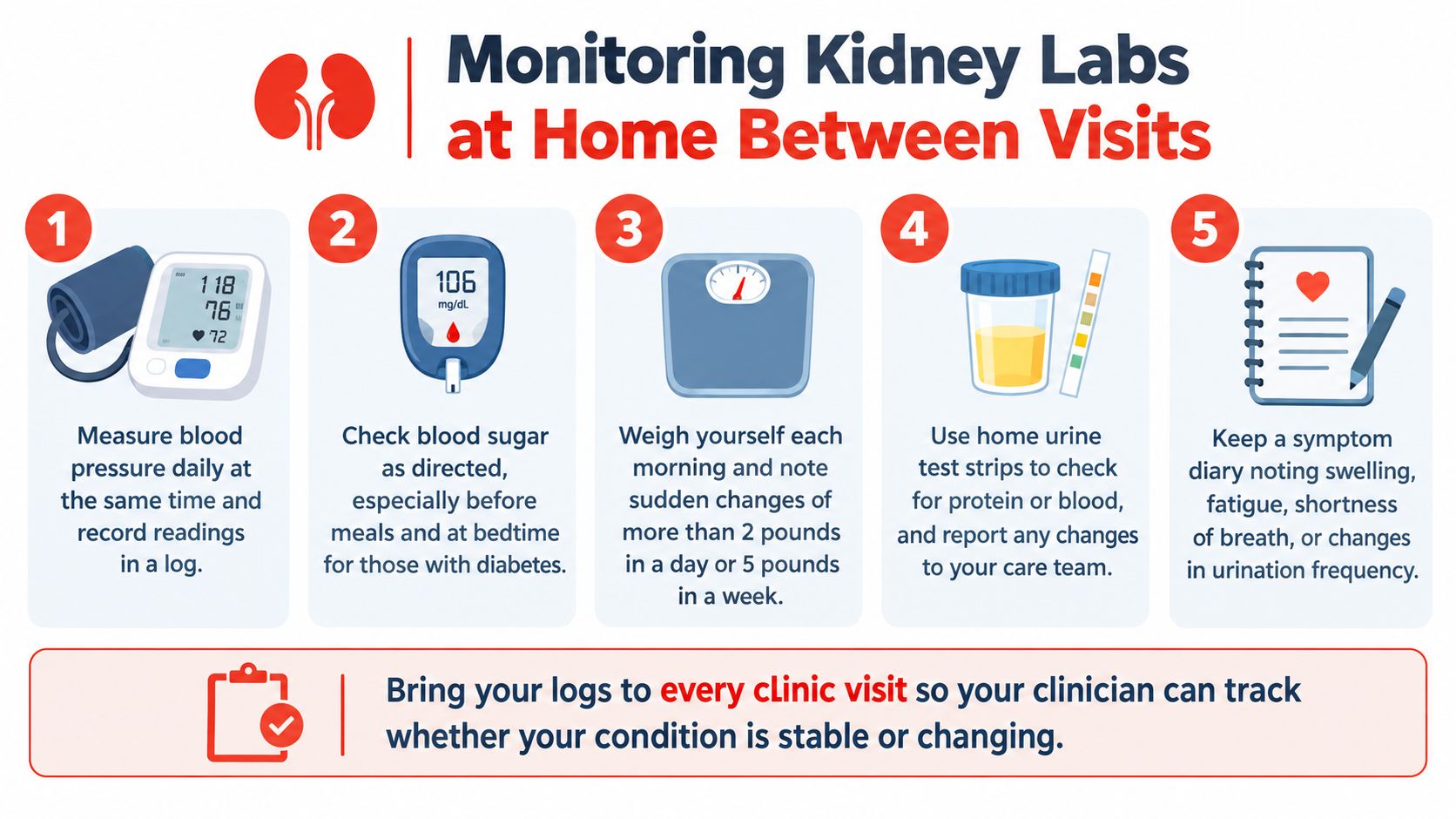
A home workflow can be simple:
- Schedule the blood draw: Arrange coordinated serum creatinine and eGFR testing when the clinician requests it.
- Collect urine correctly: Use the container and instructions supplied by the laboratory or care team.
- Record the context: Note recent vomiting, diarrhea, fever, poor intake, new medicines, or missed doses.
- Send results to the right person: A result isn't useful if it stays in a portal no one reviews.
- Compare with prior values: Clinicians interpret the pattern alongside symptoms, blood pressure, weight, and medication changes.
Home phlebotomy and coordinated urine collection can remove a major barrier for someone who can't travel easily. Services such as in-home labs and diagnostics can fit laboratory work into the patient's usual environment, but the treating clinician still needs to interpret the results.
A laboratory number becomes clinically useful only after someone connects it to the person's symptoms, medicines, hydration, and previous results.
For families, the kitchen-table version of monitoring may involve a phlebotomist collecting blood, a urine sample prepared at home, and a phone call explaining whether the trend is reassuring or needs attention. Keep a shared record with the test date, eGFR, ACR, blood pressure, weight, symptoms, and medication changes.
Kidney-Protective Medications and What Patients Should Never Adjust Alone
Some CKD medicines do more than improve a single number. They can protect kidney tissue and the cardiovascular system, but eligibility depends on eGFR, albuminuria, diabetes status, heart failure, potassium, blood pressure, hydration, and other medicines.
SGLT2 inhibitors are a major example. The 2022 KDIGO diabetes and CKD executive summary describes stronger recommendations for eligible people with type 2 diabetes and CKD regardless of glycemic control. In a key trial summarized there, dapagliflozin reduced the primary kidney outcome by 39% over a median follow-up of 2.4 years, with a hazard ratio of 0.61 and a 95% confidence interval of 0.51–0.72.
The same KDIGO summary reports evidence involving approximately 39,000 participants with type 2 diabetes, in which SGLT2 inhibitors reduced the risk of dialysis, kidney transplantation, or death from kidney causes by 33%, with a relative risk of 0.67 and a 95% confidence interval of 0.52–0.86. These figures describe trial evidence, not a promise for an individual patient.
The main medication groups
| Medication Class | What It Protects | Typical CKD Candidate | What to Flag to the Clinician |
|---|---|---|---|
| SGLT2 inhibitors | Kidney and cardiovascular health beyond glucose lowering | Eligible adults with CKD, including people with type 2 diabetes, heart failure, or qualifying eGFR and ACR findings | Fasting, surgery, serious illness, dehydration, genital symptoms, volume concerns, and an early eGFR change |
| ACE inhibitors or ARBs | Blood pressure control and reduction of albumin-related kidney stress | People with hypertension and albuminuric CKD when clinically appropriate | Dizziness, low blood pressure, potassium changes, and a creatinine rise after starting or increasing the dose |
| Finerenone | Kidney and cardiovascular risk in selected type 2 diabetes with CKD | Adults with persistent albuminuria, eGFR at least 25, normal potassium, and maximally tolerated renin-angiotensin-system blockade | Potassium results, interacting medicines, illness, and whether laboratory follow-up is arranged |
For adults with type 2 diabetes and CKD, KDIGO recommends an SGLT2 inhibitor when eGFR is at least 20 mL/min/1.73 m². The 2024 KDIGO CKD executive summary also supports use in qualifying CKD with ACR at least 200 mg/g or heart failure, regardless of albuminuria. Continuing an SGLT2 inhibitor below eGFR 20 may be reasonable after initiation unless it isn't tolerated or kidney replacement therapy begins.
Sick-day decisions require a clinician
SGLT2 inhibitors may need temporary withholding during prolonged fasting, surgery, or critical illness because of ketosis risk. ACE inhibitors and ARBs require follow-up of blood pressure, creatinine, and potassium within 2–4 weeks after starting or increasing the dose. KDIGO guidance generally supports continuation unless creatinine rises by more than 30% within four weeks, symptomatic hypotension develops, or hyperkalemia remains uncontrolled.
Don't stop, restart, or reduce a prescription on your own. Create a written sick-day plan with the prescribing clinician that explains whom to call, what symptoms matter, and how laboratory testing will be arranged.
A medication review is particularly valuable when several clinicians prescribe medicines. A structured medication review at home can include prescription bottles, over-the-counter pain relievers, supplements, recent discharge instructions, and the latest kidney results.
Controlling Blood Pressure and Blood Sugar to Slow Kidney Decline
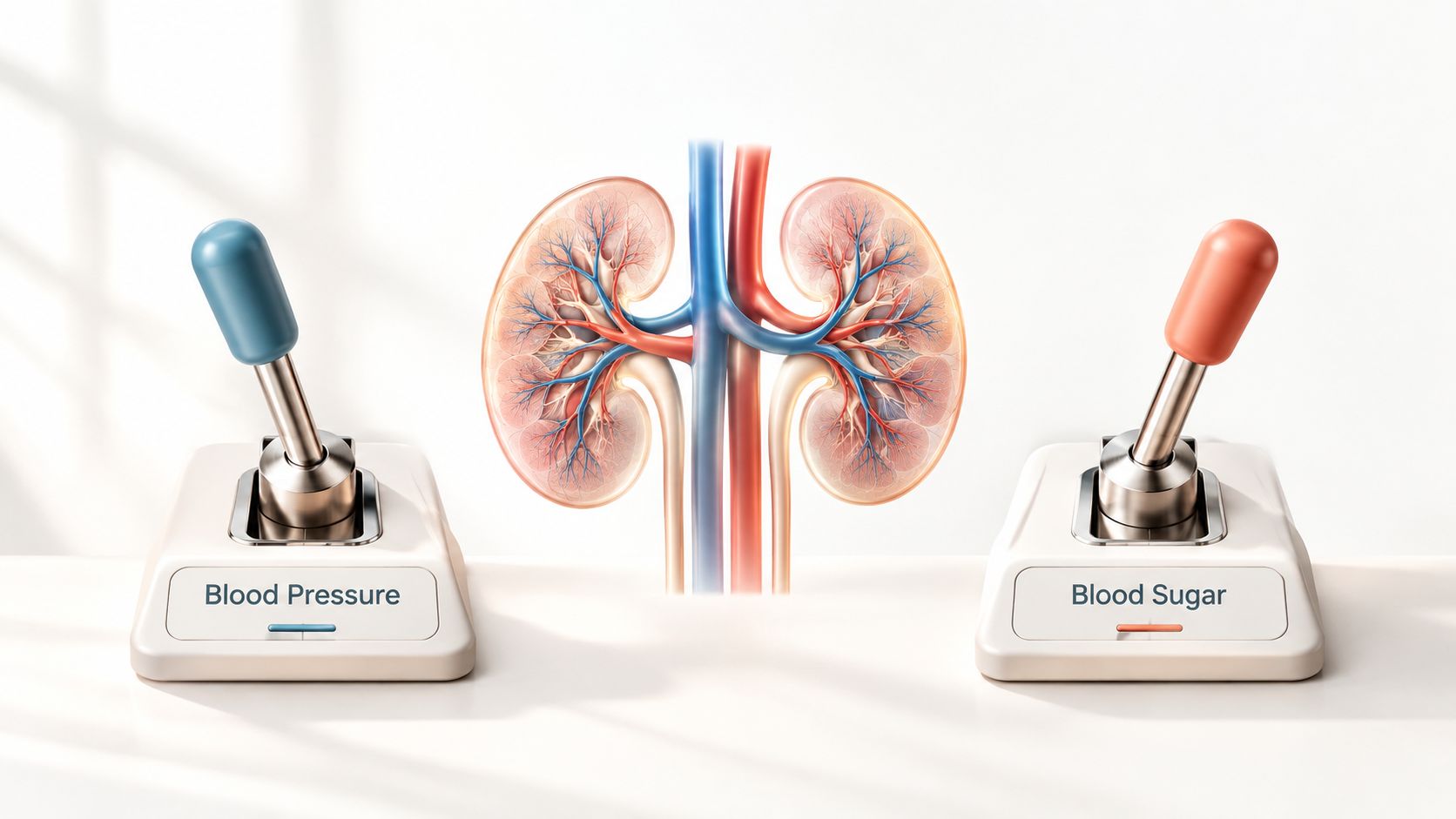
An older adult with limited mobility may measure blood pressure at the kitchen table while a family member records glucose and symptoms. That home routine matters because high blood pressure strains the kidneys' small blood vessels, while high blood sugar can injure them over time. Diabetes and hypertension are major management targets. The CDC's Chronic Kidney Disease Basics page reports that CKD affects an estimated 38% of U.S. adults with diabetes and 21% of adults with high blood pressure.
For many adults with CKD and proteinuria, a blood-pressure goal below 130/80 mmHg may provide a starting point for discussion. It is not a universal instruction. Age, falls, frailty, dizziness, heart disease, home readings, and the burden of treatment can all change the safest target. A clinician may also need to review whether a cuff is the right size and whether someone can use it reliably.
Blood-sugar goals require the same careful adjustment. An active younger adult, a frail older person, and someone at high risk of hypoglycemia may have different targets. A low reading can become dangerous quickly, especially for a person using insulin or a sulfonylurea. Do not change a dose after one unusual value unless the prescribing clinician has supplied a specific written plan.
A home routine that produces useful information
Use a validated upper-arm cuff when possible. Rest first, follow the device instructions, measure at a consistent time, and record dizziness, weakness, or other symptoms. One office reading may miss the pattern. A home log gives the clinician context before considering a medication change.
For diabetes, check glucose as directed. Record meals, medication timing, and symptoms of low blood sugar. If mobility is limited, arrange help with positioning, device use, or bringing the log to the appointment.
Keep blood-pressure and glucose records with laboratory results. This lets the care team compare kidney trends with daily readings, illness, meals, and symptoms. The following video can help families visualize how kidney health relates to blood pressure and blood sugar:
Eating Well With CKD When Appetite and Frailty Are Part Of The Picture
A rigid CKD food list can create new problems for an older adult. Someone may already have poor appetite, muscle loss, swallowing difficulty, diabetes, heart failure, limited food choices, or dependence on a caregiver. The right diet protects kidney and heart health without causing weight loss, dehydration, or loss of strength.

Use the clinical picture, not a generic restriction sheet
A practical nutrition conversation considers:
- eGFR and ACR: The degree of kidney impairment and albumin loss helps shape the plan.
- Potassium: Restriction may be unnecessary when potassium is normal, and unnecessary restriction can make meals less appealing.
- Volume status: Swelling, heart failure, thirst, blood pressure, and fluid intake matter together.
- Weight trend: Unplanned loss may be more concerning than a theoretical dietary rule.
- Goals of care: A person focused on strength and comfort may need a different balance from someone pursuing intensive disease modification.
During an illness, ask the care team what to eat and drink, which medicines require special instructions, and when laboratory testing is needed. Vomiting, diarrhea, fever, and poor intake can create dehydration risk, but fluid restriction can also become unsafe if applied without considering the person's heart and kidney status.
Gentle changes can be more sustainable
Reduce sodium by using herbs, garlic, lemon, and salt-free spice blends rather than removing entire food groups. Adjust portions instead of automatically eliminating protein or favorite foods. A registered dietitian can help adapt meals to kidney function, potassium, diabetes, swallowing ability, culture, budget, and caregiver capacity.
Don't impose a potassium restriction just because someone has CKD. Ask whether the latest potassium level, medicines, and overall clinical picture support it. Likewise, don't begin fluid restriction because of swelling without clinician guidance. Swelling may require evaluation of kidney function, heart function, medicines, and salt intake.
At home, watch the combination of appetite, weight, swelling, blood pressure, urine changes, and recent medication changes. Bring that information to the next appointment so the clinician can connect the food plan with the rest of the CKD plan.
Red Flags and When To Ask For A Nephrology Referral
Some changes deserve a same-day call to the clinician, while others require emergency evaluation. Seek urgent guidance for a sudden drop in urine output, new or worsening swelling, shortness of breath, chest pain, confusion, severe nausea or vomiting, or a sustained change in home blood pressure or weight.
A nephrology referral is commonly appropriate when kidney function is very low or falling rapidly, potassium remains difficult to control, medication decisions are complex, or the family needs guidance about possible kidney replacement therapy. The timing depends on the complete clinical picture, not one number alone.
Make the handoff useful
A strong referral includes:
- Recent eGFR, ACR, creatinine, potassium, and blood-pressure records.
- A complete prescription, over-the-counter, and supplement list.
- A description of recent illness, dehydration, falls, swelling, or weight change.
- The patient's priorities, mobility limitations, and caregiver concerns.
- A clear question for the nephrologist.
Referral doesn't mean primary care disappears. The nephrologist can advise on kidney-specific decisions while primary care continues coordinating diabetes, blood pressure, heart disease, vaccines, symptoms, medication access, and home follow-up.
How In-Home Primary Care Supports Ongoing CKD Management
For an older adult who struggles to travel, the home itself contains information an office visit may miss. A clinician can see the medication bottles, stairs, bathroom setup, food available in the kitchen, blood-pressure technique, and the practical barriers affecting hydration and meals.
An in-home primary care practice such as Life Primary Care can provide visits that typically last 45–60 minutes, in-home phlebotomy, urine testing, EKGs, medication reconciliation, telehealth follow-up, and coordination with mobile imaging when needed. The clinician can communicate results by phone, arrange referrals, share records with hospitals or specialists, and review discharge medicines after hospitalization.
Coordination is the central service
A workable CKD plan may require the primary care clinician to:
- Reconcile medicines after a hospital stay.
- Check whether a prescription still fits current kidney function.
- Coordinate nephrology and cardiology referrals.
- Review blood-pressure, glucose, weight, swelling, and symptom logs.
- Arrange laboratory testing before a medication follow-up.
- Complete a Medicare Annual Wellness Visit at the kitchen table.
- Provide same-day urgent visits for established patients when a non-emergency problem suddenly changes.
This model complements, rather than replaces, nephrology. It can be especially practical for patients in Morris, Essex, Union, Somerset, Passaic, and Bergen counties who have difficulty reaching an office. Families comparing documentation systems may also find a guide for modern clinics useful when evaluating how clinical teams organize notes, results, and follow-up tasks.
The broader in-home primary care service guide can help families understand what home visits may include. Whatever setting you use, talk with your own clinician before changing any medicine, diet, fluid plan, or monitoring schedule.
Life Primary Care brings primary care, chronic disease follow-up, in-home labs, medication reviews, and care coordination to eligible patients across northern and central New Jersey. Visit Life Primary Care to learn whether an at-home evaluation could make your CKD management plan easier to follow.
Ready for a visit at home?
Call and speak with a real person. We will confirm your insurance, find a time and come to you.
973-607-4911 Call now