
Guide · 15 min read
Chronic Disease Management at Home: A Family Guide
A daughter leaves work early to take her father to an appointment. The wheelchair-accessible ride took days to arrange, the waiting room was exhausting, and the actual visit lasted long enough to check his blood pressure and renew a prescription. By the time they get home, she's already thinking about the next appointment, the next refill, and what happens if his breathing worsens before then.
For families managing diabetes, heart failure, COPD, or several conditions at once, the hardest part of care may not be the medical plan. Transportation, fatigue, mobility limits, caregiver schedules, and missed workdays can make consistent follow-up difficult. Chronic disease management at home treats the home as a legitimate care setting, with its own routines, risks, and opportunities for better coordination.
Table of Contents
- When Trips to the Doctor Become the Hardest Part of the Week
- What Chronic Disease Management at Home Actually Means
- The Conditions Most Often Managed at Home
- How Remote Monitoring Turns Into Real Clinical Decisions
- The First Weeks After a Hospital Stay
- How House-Call Primary Care Works in Practice
- What Most Home Care Articles Leave Out
- A Practical Path Forward for Families
When Trips to the Doctor Become the Hardest Part of the Week
The problem often starts without warning. An older adult who once drove to appointments now needs help getting dressed, transferring into a vehicle, or carrying an oxygen tank. A family member rearranges work, a neighbor provides transportation, and someone else tracks the medication list. One missed appointment can create a chain of delays, especially when several specialists are involved.
A clinic visit may answer one question, such as whether blood pressure is controlled. It may not show that the patient is skipping meals because standing in the kitchen causes breathlessness, taking pills from two different bottles, or avoiding the bathroom at night because the hallway is poorly lit. Those details often stay invisible when care happens only in an exam room.
Practical rule: If getting to care repeatedly prevents the person from receiving care, transportation has become a clinical barrier.
Home-based care changes what the clinician can observe. A physician or nurse practitioner may see the medication bottles on the kitchen counter, the scale that hasn't been used, the stairs the patient no longer manages safely, or the caregiver who is doing far more than the written plan assumes. The visit becomes less about extracting information from memory and more about understanding daily life.
This doesn't mean every medical need belongs at home. Emergency symptoms still require emergency services, and some tests or procedures need a hospital or specialist facility. But routine primary care, chronic condition follow-up, medication review, preventive planning, and many post-hospital assessments can often be organized where the patient lives.
That distinction matters for people searching for Visiting physicians NJ, Visiting Doctors NJ, or Doctor home visits for elderly family members. The goal isn't just to avoid a waiting room. The goal is to create a reliable care relationship that fits the patient's functional reality.
What Chronic Disease Management at Home Actually Means
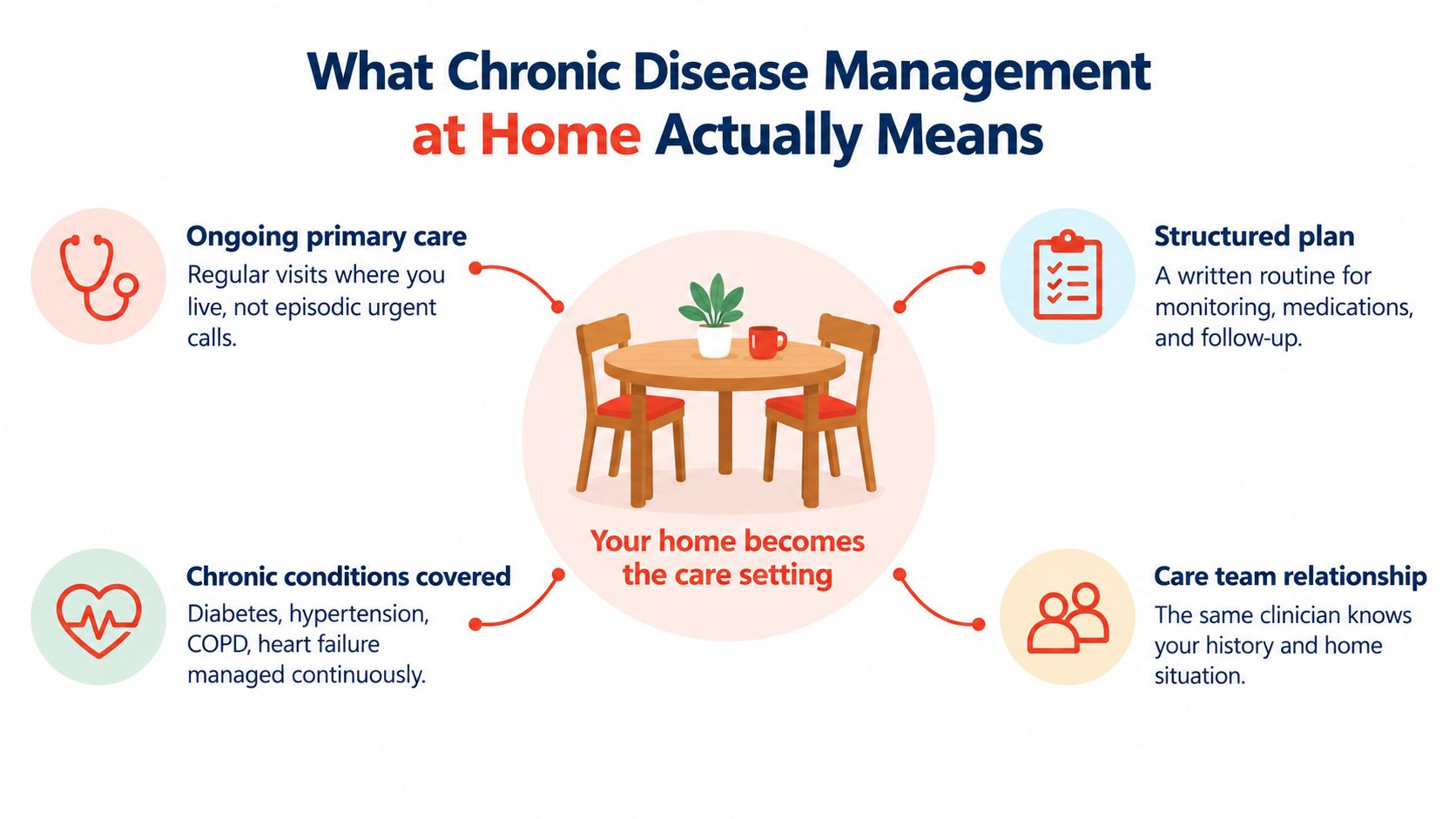
Think of home-based chronic care as a kitchen table with several coordinated place settings. One place setting is primary care. Another is medication management. Others hold monitoring, laboratory work, caregiver education, specialist communication, and follow-up after a hospitalization. The table works only when someone keeps the pieces connected.
Chronic disease management at home is structured primary care delivered where the patient lives. It can include scheduled physician or nurse practitioner visits, physical examinations, medication reconciliation, vital sign checks, in-home laboratory draws, electrocardiograms, urine testing, and coordination with mobile imaging services. It isn't the same as calling a doctor only when something feels wrong.
The care roles are different
Clinic-based primary care asks the patient to travel to the practice. Home-based primary care brings the clinician, examination, history review, and care planning to the patient. The clinical responsibility remains primary care, but the setting provides information that a clinic cannot always capture.
Home health nursing has a different role. A home health agency may provide skilled nursing, wound care, rehabilitation, education, or therapy under an established plan. A house-call primary care clinician diagnoses, treats, prescribes, manages chronic conditions, orders testing, and coordinates the broader medical plan. The two services can work together, but one doesn't automatically replace the other.
A useful home-care plan usually includes:
- Scheduled clinician visits: Routine assessments occur before a small problem becomes a crisis.
- In-home diagnostics: Phlebotomy, EKGs, urine testing, and coordinated mobile imaging reduce unnecessary travel.
- Remote monitoring: Blood pressure, weight, glucose, oxygen saturation, or symptoms may be tracked between visits when the data has a defined clinical purpose.
- Caregiver education: Family members learn what to record, what changes matter, and whom to call.
- A written care plan: The plan connects the home team with specialists, pharmacies, hospitals, and other clinicians.
Medicare's Annual Wellness Visit is another example of preventive care that can be organized around the patient. CMS explains that the visit creates or updates a personalized prevention plan and includes a health risk assessment, with coverage rules that include one visit every twelve months and no Part B deductible or coinsurance for the covered service.
Families also sometimes confuse chronic care at home with hospice. They serve different goals, although conversations about comfort and future preferences can belong in both settings. For a plain-language overview of comfort-focused services and family considerations, see Cremation.Green's resource on home hospice benefits.
The Conditions Most Often Managed at Home
Home visits can support several chronic conditions at once, but each condition creates a different monitoring pattern. A blood pressure reading may be useful for hypertension, while daily weight and breathing changes may be more meaningful for heart failure. The clinician's job is to decide which information matters, how often it should be collected, and what action follows a concerning trend.
The table below is a conversation guide, not a substitute for an individualized plan. Medication classes and specialist involvement vary with kidney function, age, symptoms, allergies, pregnancy status, goals of care, and other conditions.
Common Chronic Conditions Managed at Home
| Condition | Home Monitoring | Medication Review Focus | Home Safety Checks | Specialist Link |
|---|---|---|---|---|
| Type 2 diabetes | Glucose readings, food patterns, symptoms of low or high glucose, foot condition, and changes in activity | Insulin and other glucose-lowering medicines, timing with meals, duplicate prescriptions, and hypoglycemia risk | Falls related to low glucose, safe sharps disposal, food access, vision limitations, and foot protection | Endocrinology, podiatry, ophthalmology, and nutrition support when needed |
| Congestive heart failure | Weight trends, blood pressure, heart rate, swelling, fatigue, and breathlessness | Diuretics, blood pressure medicines, heart-failure therapies, kidney-related risks, and adherence | Fluid overload, nighttime breathing difficulty, fall risk from dizziness, and safe scale placement | Cardiology, nephrology, and heart-failure programs when involved |
| COPD | Breathing symptoms, oxygen saturation when prescribed, inhaler use, cough, sputum, and activity tolerance | Inhalers, steroids when prescribed, oxygen use, technique, and medicines that may worsen sedation | Oxygen fire safety, trip hazards from tubing, exertional breathlessness, and hypoxemia concerns | Pulmonology, respiratory therapy, and pulmonary rehabilitation |
| Hypertension | Home blood pressure, pulse, dizziness, headaches, and the conditions surrounding each reading | Antihypertensives, missed doses, orthostatic symptoms, kidney considerations, and interactions | Falls after standing, cuff placement, eyesight or hearing barriers, and unsafe self-adjustment | Cardiology, nephrology, or other specialists based on the wider picture |
| Chronic kidney disease | Blood pressure, swelling, urine changes, weight, fatigue, and laboratory trends | Kidney dosing, diuretics, blood pressure medicines, diabetes treatment, and medicines that may strain the kidneys | Dehydration, fluid overload, fall risk, dietary challenges, and medication confusion | Nephrology, nutrition, cardiology, or endocrinology |
| Hyperlipidemia | Usually symptom review, medication tolerance, diet patterns, activity, and laboratory follow-up | Statins and other lipid-lowering therapies, adherence, muscle symptoms, and interactions | Safe activity levels, fall concerns, and practical access to heart-healthy food | Cardiology or preventive cardiology when risk or symptoms warrant |
This comparison shows why a single device rarely solves the home-care problem. A person with diabetes and kidney disease may need glucose review, medication timing, laboratory monitoring, diet discussion, and coordination between several clinicians. A patient with COPD may need inhaler technique assessed in the actual room where symptoms occur, not just asked about during a hurried appointment.
Evidence supports this broader approach. A review of in-home care for chronic illness reported a 20% reduction in all-cause admissions, a 38% reduction in heart failure admissions, and an 18% lower risk of hospital readmission for patients receiving home visits compared with usual care. The same review also described improvements in activities of daily living and found, in a related synthesis, averages of 1.03 fewer unplanned hospitalizations and 1.32 fewer emergency department visits for patients receiving in-home care. Read the systematic review of in-home care for chronic illness.
How Remote Monitoring Turns Into Real Clinical Decisions
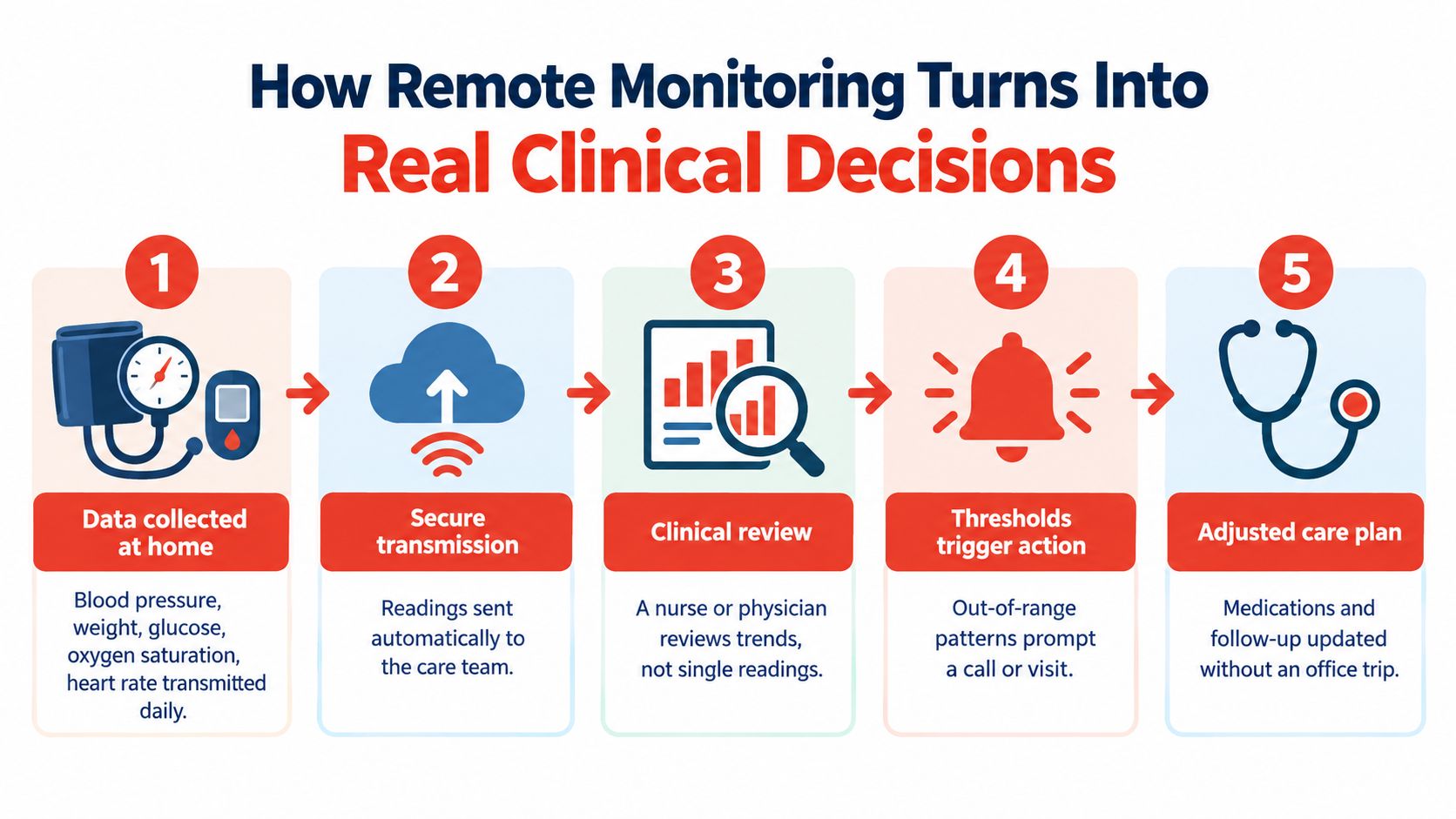
A blood pressure cuff or glucose meter isn't a care plan. It becomes useful only when the team knows who reviews the reading, when they review it, which pattern matters, and what happens next.
For heart failure, clinicians may track daily weight, blood pressure, heart rate, and symptom scores. A rising weight combined with swelling or increased breathlessness may prompt a nurse call, dietary reinforcement, a same-day medication review, or an urgent assessment. For diabetes, fingerstick glucose or continuous glucose monitoring can help the team respond to hyperglycemia and glycemic variability rather than waiting for the next office visit.
A reading needs an owner
The most effective systems use condition-specific thresholds and action pathways. A single unusual reading may reflect a loose cuff, a rushed measurement, or a device problem. A repeated change across several readings, especially when paired with symptoms, deserves a different response.
The response might be:
- A nurse call: The clinician confirms the reading, asks about symptoms, and checks whether medicines were taken correctly.
- A same-day plan adjustment: The prescriber reviews the trend and decides whether treatment or follow-up should change.
- An urgent home visit: A clinician assesses breathing, swelling, confusion, hydration, or other findings in person.
- Specialist escalation: The primary care team shares the trend with cardiology, nephrology, pulmonology, or another specialist.
- Emergency evaluation: Severe or rapidly worsening symptoms may require emergency services rather than remote troubleshooting.
Remote patient monitoring can reduce uncertainty, but it can also create alert fatigue when every value generates a notification. Families should ask whether the care team uses a nurse line, a defined review schedule, and written instructions for abnormal patterns. This guide to telehealth best practices offers useful context for making remote visits more focused and understandable.
In-home testing can complete the picture when a reading needs confirmation or a medication decision depends on fresh information. Families can also review in-home labs and diagnostics as part of a home-based care arrangement.
A review of home health monitoring found reduced HbA1c in 80% of diabetes studies, or 8 of 10, and reduced blood pressure in 55.6% of studies, or 5 of 9. Across older adults with chronic conditions, interdisciplinary home care reduced hospital admissions in the first six months by 27%, with a relative risk of 0.73 and a 95% confidence interval of 0.61 to 0.88. Review the evidence on remote monitoring and interdisciplinary home care. The message is simple: data matters most when a person is responsible for interpreting it and responding.
The First Weeks After a Hospital Stay
Discharge day can look like success while still feeling chaotic at home. The patient is tired, the medication list has changed, and instructions that seemed clear in the hospital may become confusing beside a crowded kitchen counter. A family caregiver may not know whether new swelling is expected, whether a missed dose matters, or which number to call after office hours.
A transitional home visit gives the care team a chance to compare the discharge instructions with what the patient is taking. The clinician can examine medication bottles, identify duplicate prescriptions, review pharmacy access, check wounds, assess breathing and swelling, and reinforce warning signs in the room where the family will manage them.
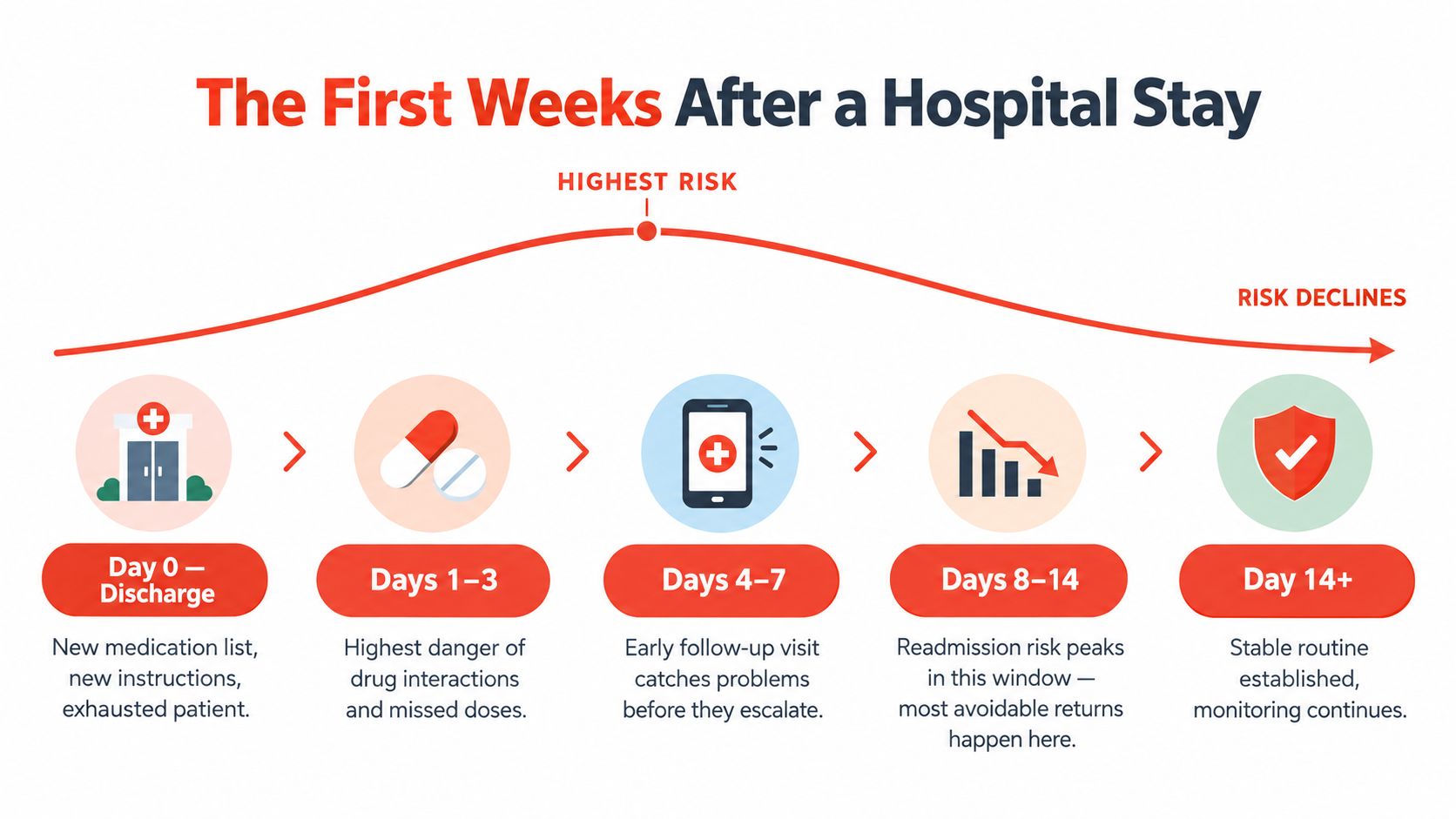
Medicare transitional care management services are designed for the first 30 days after discharge. Medicare describes coordination with the patient, family, caregivers, and other providers, including record review, appointment scheduling, community-resource coordination, medication management, and an in-person visit within two weeks of returning home.
What an in-person review can reveal
A phone call may confirm that a patient is “doing fine.” A clinician standing in the living room may notice that the patient pauses between sentences, struggles to rise from a chair, is more confused than during the call, or has swelling that the family didn't recognize as important. Those observations don't replace testing, but they add context that a checklist can miss.
A peer-reviewed transitional-care study found that, for complex chronic patients, home visits reduced the likelihood of a 30-day readmission by almost half compared with less intensive nurse-led transitional support. The article also reported that in one randomized trial involving older adults, advanced practice nurse home visits during the four weeks after discharge delayed the first readmission and reduced multiple readmissions compared with routine discharge planning. Review the transitional-care evidence.
For families preparing for this period, this guide to the first two weeks after hospital discharge can help organize questions, medication details, and follow-up needs.
The first visit should connect the hospital plan to the home routine. That may mean contacting the pharmacy, arranging labs, communicating with a specialist, clarifying wound care, and deciding which symptoms require a call rather than waiting for the next scheduled appointment.
How House-Call Primary Care Works in Practice
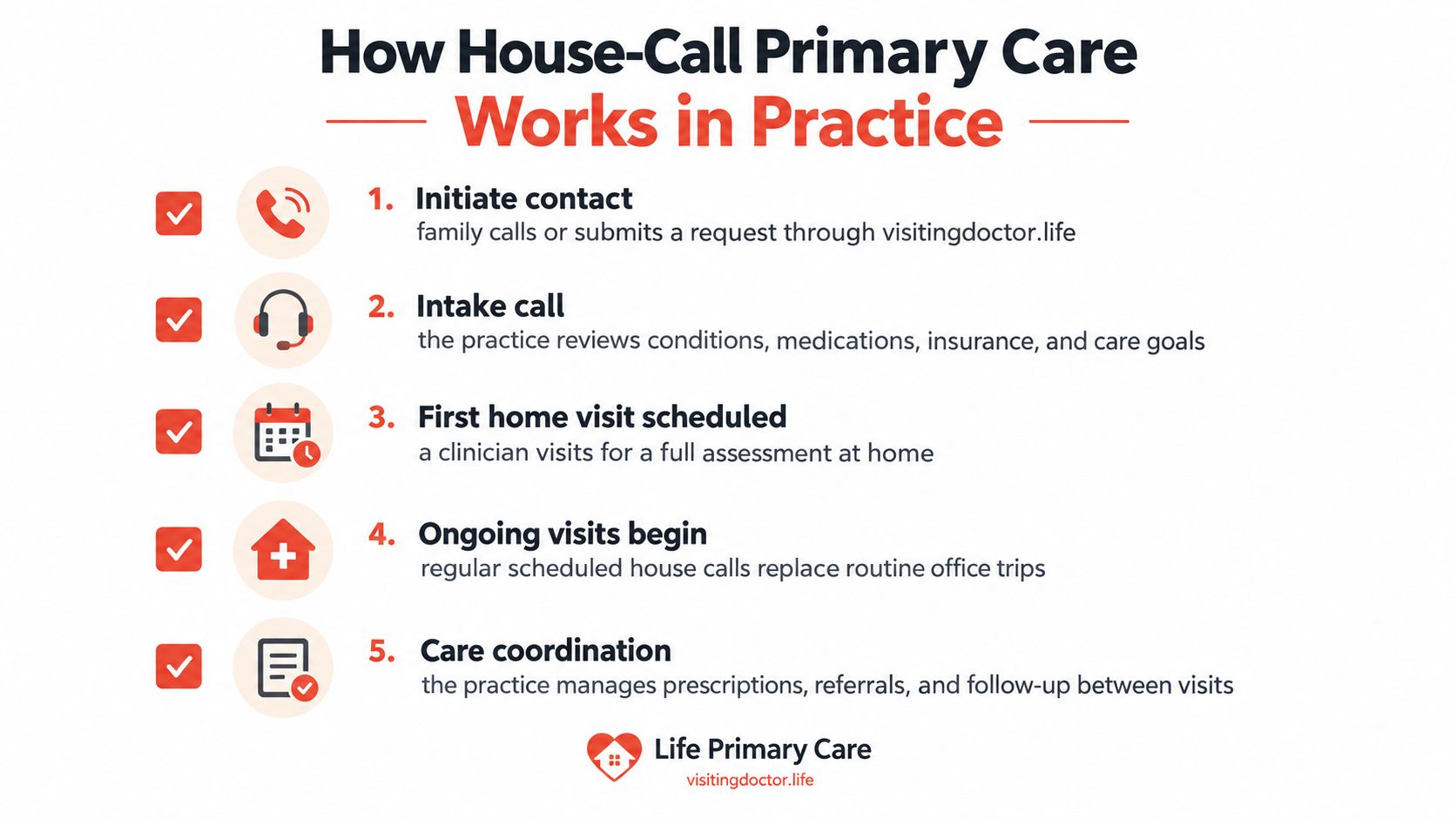
The process usually begins with a phone call or online request. The intake team asks about the patient's location, mobility, chronic conditions, recent hospital stays, medications, insurance, and the family's main concerns. That first conversation helps determine whether routine home primary care is appropriate, whether another service is needed, and how quickly the first visit should be arranged.
For a New Jersey family, a practice such as Life Primary Care may verify Medicare or commercial insurance, confirm that the home falls within its service area, and review whether the patient lives in a private home, apartment, family residence, or assisted living community. Its stated coverage spans Morris, Essex, Union, Somerset, Passaic, and Bergen counties, and its care occurs in the patient's home rather than in a clinic.
What happens during the first visit
The clinician arrives with an examination kit and the patient's chart prepared. The family should have medication bottles, discharge paperwork, specialist notes, glucose or blood pressure logs, and a list of questions available, although the visit shouldn't depend on perfect preparation.
A full first assessment may include:
- History and medication review: Every prescription, over-the-counter medicine, supplement, refill pattern, and prescribing clinician is considered together.
- Physical examination: The clinician assesses the main conditions, current symptoms, mobility, cognition, nutrition, and functional concerns.
- Baseline measurements: Vitals and relevant testing create a starting point for future comparisons.
- Home-environment review: Stairs, bathroom setup, lighting, medication storage, oxygen use, and fall hazards become part of the assessment.
- Care-plan discussion: The clinician explains follow-up, monitoring, referrals, testing, warning signs, and the role of family members.
The visit may also address preventive care. Medicare's Independence at Home demonstration was launched in June 2012 to provide home-based primary care for chronically ill and functionally limited beneficiaries who had trouble accessing office care. CMS describes the model's requirements, including in-home primary care visits, round-the-clock availability every day, electronic medical records, mobile diagnostic technology, and service to at least 200 eligible beneficiaries each year.
Ongoing care can include routine visits, urgent same-day visits for non-emergency problems, telehealth follow-ups, in-home labs, medication coordination, specialist referrals, and communication with hospitals or home health agencies. The published service information says visits typically last 45 to 60 minutes, and new patients are generally scheduled within a few business days, while established patients can often receive same-day urgent visits.
House calls don't replace emergency care, advanced hospital testing, or every specialist procedure. Families should ask what “24/7 clinical reach” means in practice, who answers after hours, how quickly urgent visits occur, and when the team directs a patient to emergency services. Clear expectations prevent the home model from becoming another source of uncertainty.
What Most Home Care Articles Leave Out
A cuff, scale, medication organizer, and oxygen monitor can support care, but devices don't make decisions. The daily behaviors around those tools often determine whether the plan works.
A patient with heart failure may need to understand what a weight change means in context. Someone with COPD may need to pace activity around breathlessness rather than stop moving completely. A person with diabetes may need help coordinating meals, glucose checks, and medication timing. These are self-management behaviors, not minor details.
Caregivers need a plan of their own. They may need instruction on warning signs, permission to ask difficult questions, and boundaries that prevent one family member from becoming the only person who knows the medication list. The care team should identify who receives updates, who can speak with clinicians, and what happens when the usual caregiver is unavailable.
The home itself is also part of the clinical environment. Throw rugs, dim stairs, an inaccessible bathroom, loose oxygen tubing, and medicines stored in confusing locations can undermine an otherwise sound treatment plan. A clinician who sees the environment can recommend practical changes that a standard medication review won't reveal.
Advance care planning belongs in this conversation, too. POLST forms, code status, surrogate decision-makers, and goals of care should be discussed before a crisis, in language the patient and family understand. A living-room conversation may make preferences easier to explain than a rushed discussion in an emergency department hallway.
A Practical Path Forward for Families
Start with an honest inventory before choosing a new service. Write down every chronic condition, specialist, medication, recent hospitalization, pharmacy, caregiver, and existing advance directive. Keep one current copy at home and make sure the person with decision-making authority knows where it is.
Then ask whether the current primary care arrangement can realistically manage the whole picture. If travel repeatedly causes missed care, if medication lists conflict, or if no one owns follow-up after discharge, in-home primary care may simplify the chain.
Use this short checklist for the next family conversation:
- Clarify responsibility: Identify the primary clinician and the family member who coordinates information.
- Define escalation: Ask what should prompt a routine call, an urgent visit, a specialist call, or emergency help.
- Check the environment: Make sure the bathroom, pathways, stairs, phone, lighting, and scale support the plan.
- Review decision documents: Confirm who holds durable power of attorney and whether advance directives are accessible.
- Plan for transitions: Arrange follow-up after hospitalization before discharge whenever possible.
- Schedule goals-of-care discussions: Talk about future priorities before the next crisis forces a rushed decision.
Small steps can prevent large reactive ones. The strongest home-care plan combines clinical monitoring with a safe environment, coordinated caregivers, clear communication, and a clinician who understands how the patient lives.
Life Primary Care provides in-home primary care, chronic disease management, preventive visits, transitional care, urgent house calls, and in-home diagnostics for eligible patients across northern and central New Jersey. Visit Life Primary Care to review the service area and request a conversation about care at home.
Ready for a visit at home?
Call and speak with a real person. We will confirm your insurance, find a time and come to you.
973-607-4911 Call now