
Guide · 14 min read
House Call MD: A Practical Guide to In-Home Medical Care
Your parent says they don't need another appointment. But you suspect the problem isn't the doctor. It's getting dressed, managing the stairs, arranging a ride, carrying oxygen, and wondering whether there will be a wheelchair at the entrance.
A house call MD changes where primary care happens. For someone whose medical needs have become tangled up with mobility problems, medication confusion, and caregiver logistics, that change can mean more than convenience. It can make ongoing medical care accessible again.
Table of Contents
- What a House Call MD Actually Does
- From House Calls to Clinics and Back Again
- How a Typical House Call Visit Works
- House Call Primary Care Compared to Other Home Services
- Who Benefits Most From a House Call MD
- Medicare, Insurance, and What Visits Actually Cost
- Finding and Scheduling a House Call MD Locally
- Questions Families Actually Ask
What a House Call MD Actually Does
Consider a familiar situation: your mother needs follow-up for several chronic conditions, but getting her to the office requires help from family. She cancels because she's exhausted before the trip begins. You're left wondering whether another missed appointment is safe.
A house-call physician brings ongoing primary care into the home. The location changes, but the purpose remains the same: understand the patient's health, examine them, manage chronic conditions, review treatments, and arrange appropriate follow-up.
The important word is ongoing. You're not buying an isolated visit because transportation fell through.
Primary Care With a Different Front Door
Think of the physician as the person responsible for keeping the overall medical picture together. A specialist may concentrate on a particular condition; the primary-care clinician considers how the diagnoses, prescriptions, daily routines, and patient's goals fit together.
That might mean discussing worsening fatigue while also asking whether the patient can reach the bathroom safely or understands the latest prescription instructions. These aren't separate concerns when they affect whether a care plan is workable.
In-home medical care can include:
- Routine primary care: Medical history, physical examination, treatment planning, and preventive discussions.
- Chronic-condition follow-up: Monitoring symptoms and reviewing how the current plan is working.
- Coordination: Communicating with specialists, hospitals, pharmacies, and other professionals involved in care.
- Caregiver participation: Including an authorized family member who helps explain changes or carry out instructions.
What the Model Isn't
A house-call physician isn't automatically a visiting nurse, hospice provider, or emergency service. Those services have different responsibilities and eligibility arrangements.
Practical distinction: Ask whether the practice will become the patient's regular primary-care team or only provide occasional visits.
That question matters more than the label. Families searching for Visiting Docs may find very different service models under similar names.
A home visit also isn't a promise that every medical problem can be handled in the living room. A responsible clinician should explain when outside testing, specialist assessment, or hospital care is necessary.
From House Calls to Clinics and Back Again
House calls aren't a new invention. What's new is the effort to rebuild them as an organized care model for patients who struggle to reach an office.
Physicians conducted approximately 40% of patient encounters at home in the 1930s, falling to about 10% by 1950, 1% by 1980, and 0.5% by 1996, alongside the expansion of hospitals, office practices, transportation, and changing payment arrangements, as described in this historical analysis of physician house calls.
Those changes helped establish the office-centered system families recognize today. But moving care into clinics didn't remove the needs of people who couldn't get there.
Why the Return Is More Than Nostalgia
For a medically complex patient, reliable access requires more than an appointment slot. Someone has to connect the examination, medication decisions, follow-up testing, and communication with caregivers.
Medicare Part B house-call billings increased from approximately 1.4 million visits in 1999 to 2.3 million in 2009, following regulatory changes and reimbursement increases, according to this American Family Physician overview of home care.
The useful lesson isn't that every patient should stop attending a clinic. It's that healthcare delivery needs alternatives when the office model becomes impractical.
The modern case for house calls is access to continuing care, not a return to the doctor's black bag for its own sake.
Different Tools for Different Access Problems
Remote appointments can address some travel barriers, while an in-person home examination addresses others. The choice should follow the patient's needs rather than a preference for a particular technology.
For families also arranging care across state lines, Empire Medical Wellness's telemedicine options for New York adults provide a separate resource to explore. Confirm location requirements, clinical suitability, and whether an in-person examination is needed.
The larger principle is straightforward: build access around what the patient can realistically use. A clinic, a home visit, and a remote appointment aren't interchangeable, but each may have a place in a coordinated plan.
How a Typical House Call Visit Works
A useful home visit starts before the doorbell rings. The clinician needs a prepared chart, the reason for the appointment, and any relevant information from recent care.
Ask what records the practice already has and what's missing. A discharge summary sitting on your kitchen counter won't help the clinician prepare unless someone shares it.
Arrival and Assessment
A clinician may arrive with a portable examination kit and review symptoms, medical history, vital signs, and examination findings. Don't assume every visit follows an identical schedule; ask how much time is reserved and whether the initial assessment differs from follow-up care.
The surroundings add context. For example, a discussion about missed medication can lead to discovering that the bottles are stored upstairs while the patient spends the day downstairs.
Helpful preparation includes:
- Medication access: Set out prescription bottles, nonprescription products, supplements, and medication organizers.
- A usable examination space: Choose somewhere the patient can sit comfortably and the clinician can work.
- Relevant observations: Note changes in appetite, walking, sleep, breathing, or daily function without trying to diagnose them.
- Caregiver availability: Arrange for someone familiar with the patient's routine to participate, with the patient's permission.
The environment review isn't a housekeeping inspection. It helps the clinician understand whether the proposed care plan fits the patient's actual circumstances.
Tests, Results, and the Next Contact
Ask which diagnostics the practice performs directly and which it arranges through outside providers. Options to discuss include blood draws, EKGs, urine testing, and coordinated mobile X-ray or ultrasound.
Availability shouldn't be confused with medical necessity. The clinician decides which tests are appropriate, and the office should explain any separate scheduling or billing.
Before the visit ends, request a clear account of what happens next: pending tests, referrals, follow-up arrangements, and who will contact the family. Results that aren't available during the appointment require a later communication plan.
Telehealth can provide another point of contact between in-person visits when clinically appropriate. It shouldn't leave the family uncertain about whom to call when the patient's condition changes.
House Call Primary Care Compared to Other Home Services
Families often hear “care at home” and assume the services work alike. A more useful comparison separates medical responsibility, eligibility, and payment.
The following table is a conversation guide, not a coverage determination. Ask each provider to confirm its role and the patient's benefits.
House Call Primary Care vs Adjacent Home Services
| Service | Who It's For | Who Orders It | Typical Duration | How Billing Works |
|---|---|---|---|---|
| House-call primary care | Patients seeking ongoing medical care at home | Contact the practice for assessment and enrollment | Continuing care, according to the plan | Verify the clinician's participation and visit coverage |
| Medicare home health | Patients meeting homebound and skilled-service requirements | Ordered through an eligible clinician and Medicare-certified agency | Based on assessed skilled-care needs | Separate home-health benefit and eligibility rules |
| Hospice | Families exploring an end-of-life care model | Confirm referral and certification requirements with the provider | Based on eligibility and the care plan | Ask the hospice provider and insurer |
| PACE | Eligible older adults needing coordinated community-based support | Enrollment involves program assessment | Ongoing while enrolled and eligible | Coordinates applicable Medicare and Medicaid services |
| Telehealth | Patients whose concern can appropriately be addressed remotely | Scheduled with the treating practice | An appointment or continuing follow-up | Verify coverage for the particular service |
Coordination Is Different From Substitution
New Jersey's PACE program generally requires participants to be at least 55, meet clinical eligibility requirements, and be able to live safely in the community at enrollment; it coordinates medical care, prescription drugs, and other services, including home services as needed, according to New Jersey's PACE information.
PACE is therefore distinct from hiring a private house-call practice. For another practical comparison, consult this guide to home health, home care, and house calls.
Don't equate home visits with concierge membership, either. If you're also comparing specialty practice arrangements, Hosmane Longevity Center's discussion of concierge cardiology vs traditional care offers a separate resource for questions about that model.
The question to ask every provider is: Which responsibilities will you take on, and which remain with someone else?
Who Benefits Most From a House Call MD
Age alone doesn't tell you whether home-based primary care is a good fit. The stronger question is whether medical complexity and functional limitations prevent consistent office-based care.
A systematic review of high-need, high-cost populations found reduced hospitalizations for ambulatory-care-sensitive conditions with home-based primary care, but rated the evidence certainty low and found no mortality change, according to the review of interventions for high-need patients. That supports careful patient selection, not promises that home visits will prevent every hospitalization.
Patterns That Deserve a Closer Look
House calls for seniors are particularly worth discussing when several difficulties overlap:
- Recent hospital discharge: The family is managing new instructions, changed prescriptions, and follow-up appointments.
- Dementia and caregiver dependence: The clinician needs information from people who understand the patient's usual behavior and routines.
- Mobility limitations or oxygen dependence: Leaving home requires substantial preparation or assistance.
- Repeated gaps in follow-up: Appointments are missed because the travel burden is no longer manageable.
- Distance caregiving: An adult child needs an agreed communication process rather than fragmented updates.
For residents of assisted or independent living, ask who already manages primary care and how an outside clinician would communicate with staff. A new provider should clarify responsibilities rather than create competing plans.
Transportation Is a Clinical Access Issue
Among adults aged 65 and older, 8.1% of those with disabilities lacked reliable transportation, compared with 3.6% of those without disabilities, in the CDC's analysis of the 2022 National Health Interview Survey transportation data.
That doesn't establish whether an individual needs home visits. It does show why transportation belongs in a serious discussion about access.
Don't ask only whether your parent can make the trip once. Ask whether the family can sustain the travel required for continuing care.
When comparing Doctor home visits for elderly patients, describe the practical barriers plainly. The clinician needs to know what makes appointments difficult, not just the list of diagnoses.
Medicare, Insurance, and What Visits Actually Cost
Medicare coverage for a clinician's house call and Medicare's home-health benefit are different questions. Confusing them can cause families either to assume everything is covered or to give up before checking.
Medicare home health generally requires the patient to be homebound and need qualifying intermittent skilled nursing or therapy through a Medicare-certified agency. The homebound standard concerns the assistance or considerable effort required to leave home, not a blanket rule that the person can never leave, as explained in Medicare's home-health coverage guide.
Will Medicare Pay for the Physician's Visit?
Ask the practice to verify the specific medical service, clinician participation, and your parent's coverage. Don't treat eligibility for visiting nursing services as the deciding test for a primary-care house call.
The home-health booklet doesn't establish payment for every routine clinician visit delivered at home. A coverage answer needs to address the actual appointment being scheduled.
For a focused starting point, use this explanation of whether Medicare covers house calls, then confirm the details with the practice and insurer.
With Medicare Advantage, ask about network participation, referrals, and prior authorization for the proposed service. Don't assume the rules match another patient's plan or that an office's acceptance of Medicare settles every Medicare Advantage question.
A Verification Checklist for the Scheduling Call
Have the insurance cards available and ask:
- Visit coverage: Is this clinician in network, and is this type of home visit covered?
- Patient responsibility: Could a deductible, copay, or coinsurance apply? Can you explain the expected responsibility before scheduling?
- Authorization: Does the plan require approval or a referral, and who obtains it?
- Outside diagnostics: Will a laboratory or mobile imaging company bill separately?
- Existing services: Can the clinician communicate with the current home-health agency, and what permissions are needed?
- Additional charges: Are there membership, travel, administrative, or other charges outside the insurance claim?
There isn't a responsible universal price to quote without that information. Ask for the answer in writing when possible, including any services that remain unverified.
A physician and home-health agency can have complementary roles, but families should request an explicit communication plan. Identify who receives updates, who handles medication questions, and whom to contact after discharge or a change in condition.
Finding and Scheduling a House Call MD Locally
Start with geography and the kind of care you need, not just a search result. Searches such as Visiting physicians NJ, Visiting Doctors NJ, Dr House calls NJ, and Doctor house calls NJ should lead to a conversation about ongoing care, eligibility, and availability.
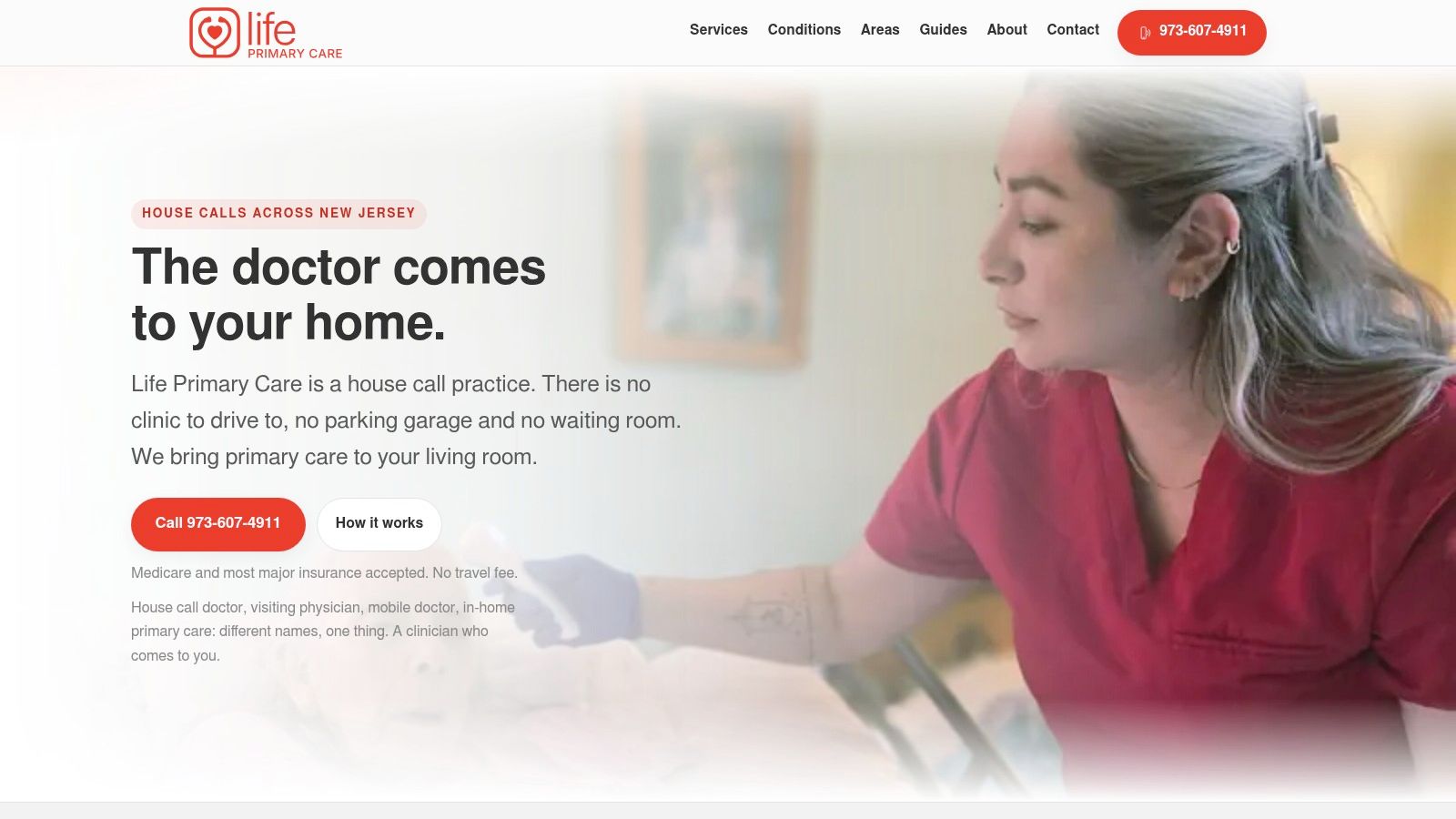
The practice website provides a starting point for that conversation.
Establish the Service Area and Next Available Visit
The local practice described here serves Morris, Essex, Union, Somerset, Passaic, and Bergen counties, with scheduling, insurance verification, and follow-up coordinated from East Hanover. Ask whether the patient's particular residence is within the current travel area and whether care can begin within the timeframe needed.
Don't rely on an assumed new-patient turnaround or guaranteed same-day availability. Explain whether you're arranging continuing care, responding to discharge instructions, or seeking assessment of a new concern.
For a broader evaluation checklist, review how to choose an in-home doctor. Ask who provides visits, who handles calls between appointments, and how information reaches specialists and hospitals.
Prepare a Clear Handoff
Give the coordinator the patient's address, insurance details, current clinicians, recent hospital information, and authorized family contact. Mention an existing home-health agency so the office can clarify how communication would work.
If you're rebuilding several parts of a parent's care network, Dental Professionals of Fair Lawn's questions to ask a new dentist provide a separate resource for the dental side of that process. Keep the same focus on communication, records, and clearly assigned responsibilities.
You can also view the following video while preparing questions for the practice.
New Jersey also identifies 21 Area Agencies on Aging, one in each county, which connect older adults and caregivers with supports such as transportation, case management, and respite care through the state's older-adult resource network. These supports can complement medical care rather than replace it.
Questions Families Actually Ask
Can We Wait for a Same-Day Visit?
A same-day house call, if available, isn't a substitute for emergency response. If you believe someone is having a medical emergency, call 911 rather than waiting for the practice to return a scheduling call.
For a concern that doesn't appear to be an emergency, describe the change to the practice and ask how it handles clinical triage. Don't assume a scheduled visit means the concern has already been medically assessed.
What If the Discharge List and Bottles Disagree?
Keep both available and flag the conflict. Don't guess which instruction takes priority or change treatment based on a comparison alone.
Medication reconciliation means identifying what the patient is taking and resolving differences; prescribing decisions require the responsible clinician. A review of older adults' care transitions found benefits associated with reconciliation as part of broader support, while emphasizing the importance of intervention design in medication continuity after hospital discharge.
Ask who will contact the hospital, specialist, or pharmacy, document the agreed instructions, and explain them to the patient and caregiver.
Who Can Change a Specialist's Prescription?
The clinician must assess the issue and determine the appropriate prescribing and coordination steps. The family's role is to identify the prescriber, describe what's being taken, and report the concern accurately.
Before ending the conversation: Ask who owns the next action and how you'll know it has been completed.
Does a Post-Discharge Visit Guarantee No Readmission?
No. CMS describes transitional care management within a 30-day period beginning on discharge, but that framework isn't a guarantee of outcome, as explained in its transitional care management guidance.
What Should We Compare Between Practices?
Whether you search for an In Home Doctor for Elderly family members, At-Home Doctor Visits, or Doctor House Calls for Seniors, compare concrete arrangements: clinical responsibility, communication, coverage verification, diagnostic access, and urgent-call procedures. The right fit should leave you knowing who's responsible, what happens next, and how to get help.
Life Primary Care offers house-call primary care across Morris, Essex, Union, Somerset, Passaic, and Bergen counties, with scheduling, insurance verification, and follow-up coordinated from East Hanover. Visit Life Primary Care to discuss your family member's needs, confirm the service area and coverage, and ask about arranging an initial home visit.
Ready for a visit at home?
Call and speak with a real person. We will confirm your insurance, find a time and come to you.
973-607-4911 Call now