
Guide · 14 min read
Care Management for Seniors: Home Guide
Your mother's appointment is at 10:30, but getting her there starts hours earlier. Someone must arrange transportation, manage the walker, carry the oxygen equipment, explain the long wait, and remember which specialist changed which medication. By the time she reaches the examination room, the visit may be nearly over, while the practical problems affecting her safety remain invisible.
That situation isn't a family failure. It's often a mismatch between an office-based system and the realities of aging. Care management for seniors works better when clinicians coordinate treatment around the patient's actual life, including the home, the caregiver, the medication cabinet, and the transition back from the hospital.
Table of Contents
- Rethinking Medical Appointments for Aging Adults
- Core Components of Senior Care Coordination
- Navigating Post-Hospital Transitional Care
- Chronic Disease Oversight in the Home Environment
- Supporting Family Caregivers Beyond Clinical Needs
- Understanding Access and Coverage for Home Visits
- Preparing for an In-Home Primary Care Visit
Rethinking Medical Appointments for Aging Adults
A daughter in New Jersey may know her father needs a follow-up visit, yet still postpone it. He can't transfer easily from his recliner to the car. The elevator in his apartment building is unreliable. His caregiver can't miss another workday, and the last office visit left him exhausted for the rest of the afternoon. None of this means he doesn't value medical care. It means the route to the clinic has become part of the medical problem.
Traditional appointments are designed around a mobile patient who can arrive on time, describe symptoms clearly, bring an accurate medication list, and return home without assistance. Many older adults don't fit that model. Dementia, frailty, oxygen use, incontinence, poor balance, and limited transportation turn a short appointment into a family production.
Practical rule: If travel repeatedly prevents a senior from receiving primary care, the care model needs to change, not simply the family's effort.
House calls for seniors address that mismatch by moving primary care into the patient's living space. A visiting physician can see how the patient rises from a chair, moves down the hallway, uses the bathroom, stores medications, and manages meals. Those details often explain symptoms and missed treatments more clearly than a rushed description in a clinic.
The modern version of Doctor House Calls for Seniors isn't limited to an isolated visit. It can include chronic disease oversight, medication review, wellness planning, urgent non-emergency visits, mobile diagnostics, referrals, and communication with specialists. The purpose is to create a dependable care loop around the person who needs help, rather than requiring the caregiver to assemble that loop alone.
House calls have also returned as a meaningful physician service. The American Academy of Family Physicians reports that the number of house calls conducted from 1996 to 2016 doubled, while Medicare Part B paid for nearly 2.6 million house calls in 2015. (American Academy of Family Physicians overview of physician house calls)
For families comparing Visiting physicians NJ, Visiting Doctors NJ, or a Doctor home visits for elderly service, the key question isn't just whether a clinician can come to the home. Ask whether the practice can coordinate the rest of the care, including medications, testing, hospital follow-up, and communication with the people making daily decisions.
Core Components of Senior Care Coordination
At the kitchen table, a clinician may find three medication lists that do not agree. The patient has bottles from several prescribers, the pharmacy may need to deliver the next supply, and the daughter managing refills may need the revised instructions by phone. Care management organizes those practical details alongside clinical decisions, follow-up, and communication.
What a coordinated home visit includes
The visit starts where daily care happens. The patient and caregiver can describe recent changes, while the clinician observes mobility, cognition, medication storage, meals, and safety concerns in context. The assessment may include a history and physical examination, review of conditions such as diabetes or heart failure, and a Medicare Annual Wellness Visit when appropriate.
The home often exposes barriers an office visit cannot. Bottles may differ from the electronic record. A caregiver may split tablets because swallowing is difficult. Confusing packaging, cost, or a lack of pharmacy delivery may lead the patient to skip treatment.
Common components include:
- Primary care at home: History, examination, treatment planning, and follow-up take place where the patient lives.
- Medication coordination: Prescriptions from different clinicians are checked for duplication, interactions, unclear instructions, and practical obstacles.
- Chronic disease monitoring: COPD, hypertension, chronic kidney disease, diabetes, and heart failure are followed over time.
- Mobile diagnostics: Phlebotomy, EKGs, urine testing, and mobile imaging coordination can reduce unnecessary travel.
- Communication: Results, referrals, and care plans are explained to the patient and caregiver, with permission.
- Urgent access: Same-day evaluation may be available for non-emergency concerns that might otherwise lead to urgent care or an emergency department.
Fragmented care creates work for families and risk for patients. In one U.S. study, approximately 42% perceived poor care coordination, including 14.8% who reported conflicting advice from different providers. Better perceptions of coordination were associated with a 9% reduction in ADL difficulty and a 9% reduction in medical nonadherence due to cost for each one-point increase in perceived coordination. (Study of perceived care coordination and outcomes among older adults)
The practical response is a written plan that names who will act, what the patient should do, and how results will reach the caregiver. That plan must account for transportation limits, caregiver capacity, appointments, changes between care settings, and the patient's ability to manage treatment at home. These details matter especially for seniors living with dementia or several chronic conditions.
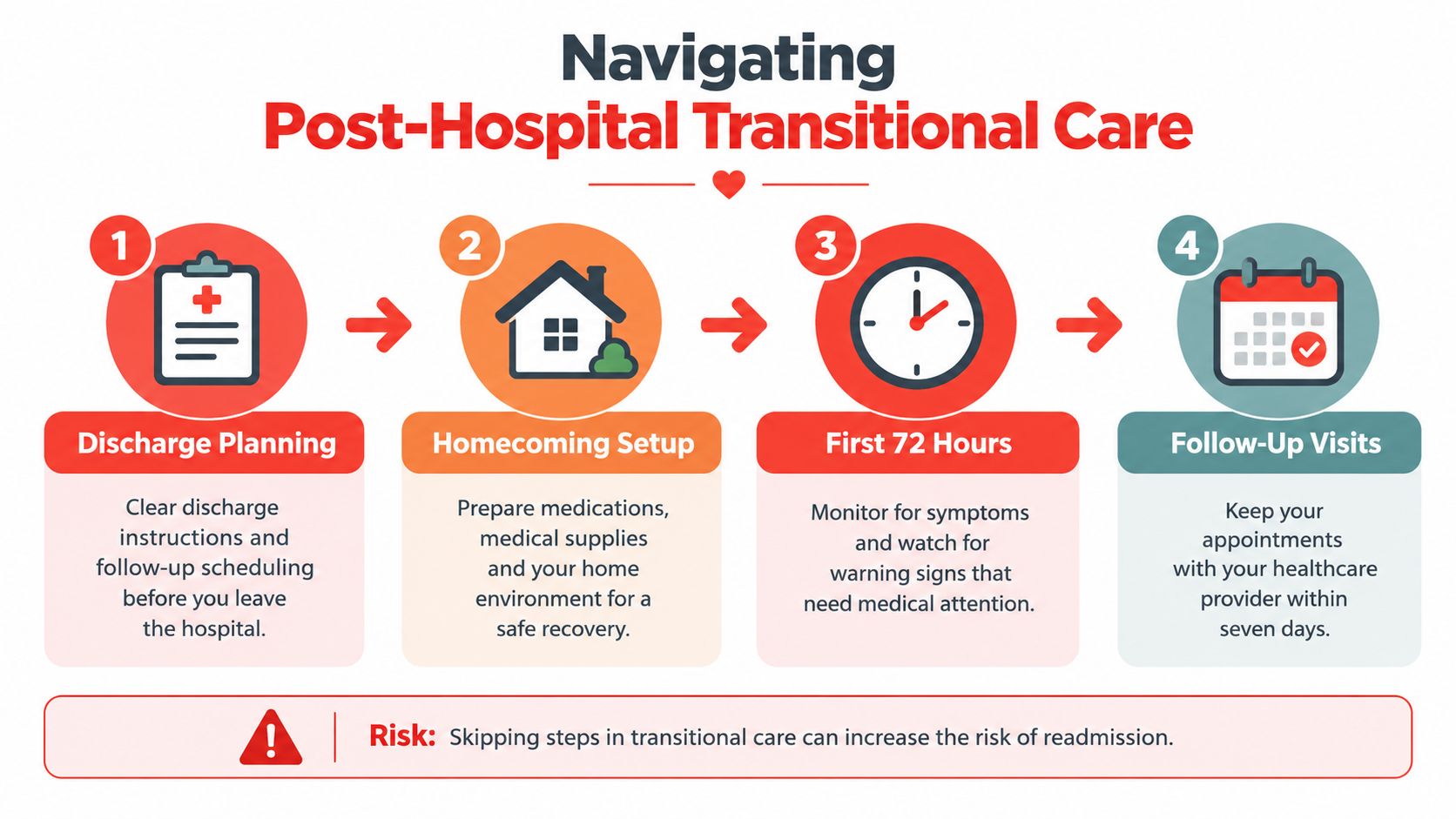
A short office visit may record a blood pressure reading. A coordinated home visit can show why the medication is being missed, whether bottles are mixed together, and whether dizziness makes the route to the bathroom unsafe. That environmental information connects clinical decisions to the patient's ability to age in place and gives the care team a workable plan.
Navigating Post-Hospital Transitional Care
Leaving the hospital doesn't mean the confusing part is finished. The patient may return home with new prescriptions, discontinued medicines, changed doses, dietary instructions, equipment needs, and several appointments. A caregiver may be expected to understand all of it while also watching for symptoms that weren't present before admission.
The first home review
A post-discharge visit should begin with the discharge paperwork, but it can't stop there. The clinician needs to compare the hospital list with everything the patient was taking before admission, including over-the-counter products and medicines prescribed to another household member that the patient may be using.
The AHRQ PSNet summary of the Transition Coach model describes an ideal home visit within 48 to 72 hours of discharge. It emphasizes active medication reconciliation because duplications, omissions, and conflicting instructions commonly appear during transitions. (AHRQ PSNet discussion of transition coaching and medication reconciliation)
A practical home review should clarify:
- What changed: Which medicines started, stopped, or changed dose?
- What is available: Are the prescribed medicines physically in the home?
- What the patient takes: Does the patient understand the schedule, and can the caregiver supervise it?
- What the home requires: Is equipment working, and can the patient reach the bathroom, food, and phone safely?
- What happens next: Who will receive results, arrange referrals, and answer questions?
Medicare-related transitional care management also has defined timing requirements. A 2024 review states that eligible providers must contact the beneficiary or caregiver within two business days after discharge and complete a follow-up face-to-face visit within 7 or 14 days, depending on complexity. The review notes that the follow-up can occur in the home. (Review of transitional care management requirements)
Medication review and early contact work best together. A meta-analysis of interventions for older adults found medication reconciliation was associated with fewer readmissions, with a pooled relative risk of 0.88. Telephone follow-up was associated with a relative risk of 0.84, and self-management coaching showed a relative risk of 0.81. (Meta-analysis of interventions for older-adult care transitions)
The purpose isn't to make a caregiver independently diagnose complications. It's to give the care team enough early information to resolve discrepancies, assess recovery, and direct the family to appropriate help before a manageable concern becomes an emergency.
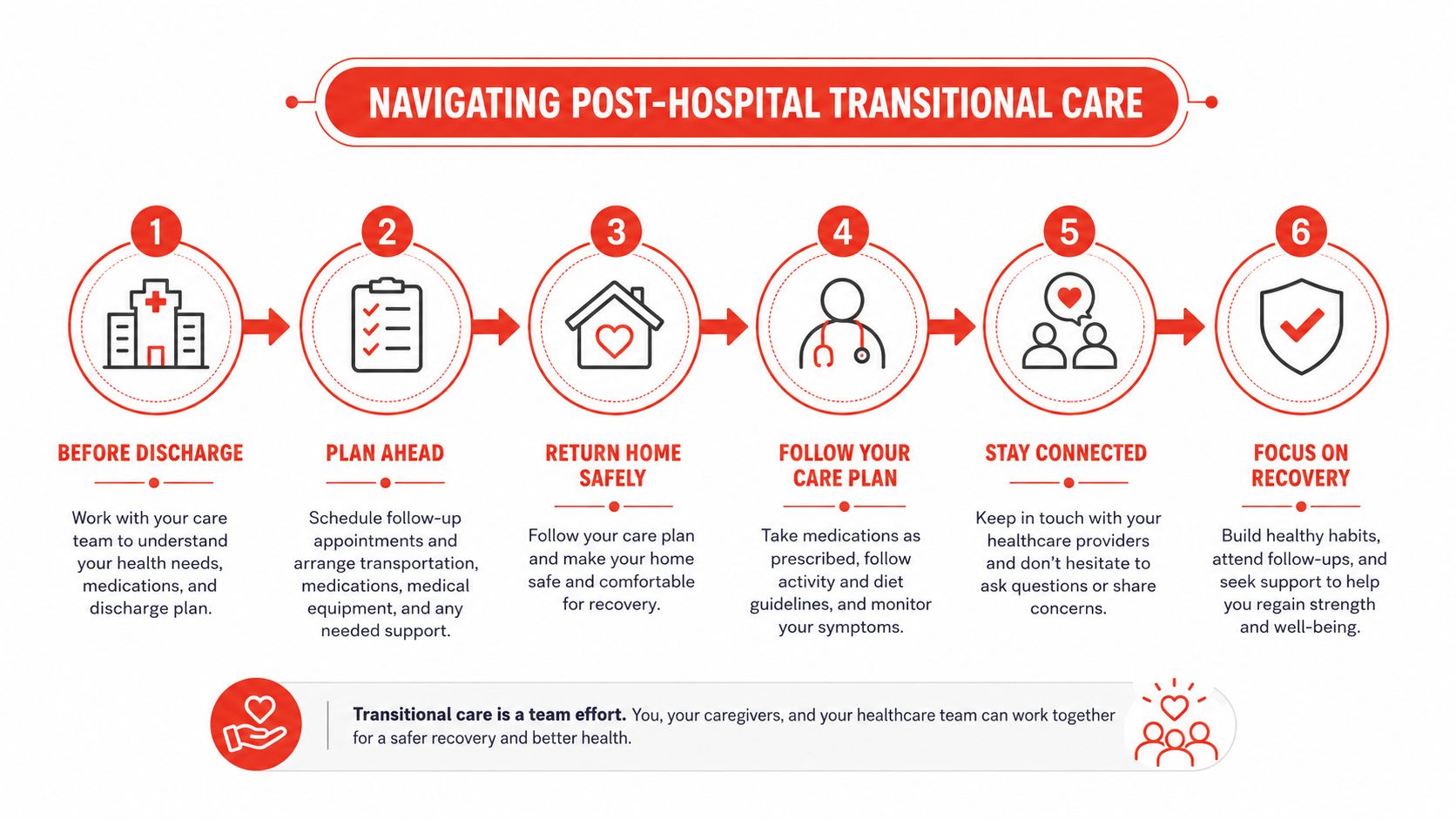
Families arranging this process can review post-hospital transitional care at home to understand what a coordinated visit may involve. If symptoms appear severe or immediately dangerous, call emergency services rather than waiting for a routine home appointment.
Chronic Disease Oversight in the Home Environment
A chronic condition is managed in a home, not inside a diagnosis code. A patient with COPD may be struggling because the bedroom is upstairs. Someone with heart failure may be weighing meals inaccurately because the kitchen scale is difficult to use. A person with dementia may appear nonadherent when the underlying problem is that the medication organizer is too complicated.
What clinicians can see at home
The physical environment gives a visiting clinician information that a clinic cannot. Stairs, loose rugs, narrow pathways, bathroom access, lighting, and chair height all affect whether a patient can follow a treatment plan safely. The refrigerator and pantry may show whether dietary recommendations are realistic. Medication bottles on the nightstand may expose duplicate prescriptions or an outdated instruction sheet.
This doesn't mean a physician replaces an occupational therapist, home health agency, or family caregiver. It means the primary care plan can account for the work those people are doing. A referral is more useful when it responds to a specific barrier rather than a vague concern about declining function.

Home-based oversight can include portable EKGs, blood draws, urine testing, and coordination of mobile X-ray or ultrasound services when clinically appropriate. These tools don't eliminate the need for specialists or emergency care, but they can reduce avoidable travel and give the primary care team more timely information.
A treatment plan only works if the patient can carry it out in the place where the treatment happens.
For families supporting mobility limitations, non-medication strategies also deserve attention. A practical resource on how to manage chronic joint pain naturally can help caregivers consider comfort and daily-function approaches to discuss with the patient's healthcare team. It shouldn't replace evaluation of new, severe, or worsening symptoms.
The value of Doctor house calls NJ services is therefore environmental as well as clinical. A clinician can connect a symptom to a fall risk, a medication to dizziness, or a missed dose to a caregiver's schedule. Families seeking a structured approach can review chronic disease management through home visits and ask how monitoring, testing, and follow-up are coordinated.
Supporting Family Caregivers Beyond Clinical Needs
Families often discover that the diagnosis is only half the work. The rest involves transportation, meal preparation, bathing support, housing access, respite, pharmacy calls, specialist scheduling, insurance questions, and repeated explanations between offices.
A regional 2025 needs assessment found that older adults ranked in-home support to maintain independence highest at 54%. Caregivers most often reported unmet needs for in-home care services at 58%, respite care at 56%, financial assistance at 45%, care coordination at 44%, and information and resources at 42%. (2025 needs assessment of older adults and caregivers)
Those priorities challenge a narrow definition of senior care management. Families don't only need someone to monitor blood pressure. They need help answering, “Who handles the problem around the appointment?”
The coordination office matters
A reliable care model gives caregivers one practical route for questions and follow-up. That may include verifying insurance, arranging visits, communicating test results by phone, coordinating referrals, and documenting which specialist changed a medication. The office can't provide every social service directly, but it can help identify the gap and coordinate with the appropriate agency.
This support is particularly important when family members live out of state or share responsibilities across siblings. A caregiver shouldn't have to take unpaid time away from work just to determine whether a referral was sent. Clear communication also helps prevent the patient from receiving contradictory instructions from different prescribers.
| Family problem | Useful coordination response |
|---|---|
| Multiple specialists | Maintain an updated list of clinicians, prescriptions, and recent changes |
| Home accessibility | Document stairs, bathroom barriers, mobility concerns, and needed referrals |
| Caregiver fatigue | Discuss respite and in-home support resources |
| Complex scheduling | Arrange visits, labs, referrals, and follow-up through one care pathway |
| Financial uncertainty | Verify coverage before services and clarify what requires separate approval |
Care management can also protect the relationship between caregiver and patient. When the daughter, son, or spouse becomes the full-time scheduler, translator, medication auditor, and records clerk, ordinary family conversations become dominated by logistics. Delegating appropriate coordination gives caregivers more room to remain partners and loved ones.
That doesn't mean every practice offers the same level of support. Ask who answers calls, who communicates results, whether the practice works with outside hospitals, and how the team handles a medication change from another prescriber. Those answers reveal more than a general promise of “complete care.”
Understanding Access and Coverage for Home Visits
A daughter may arrange a home visit after her father stops driving, only to learn that the practice does not serve his ZIP code or that the insurer treats the visit differently from an office appointment. Families should ask two questions early: will insurance pay, and can a clinician come to the home? The answer depends on the service, eligibility, insurer, and billing model, so confirm coverage before scheduling.
Medicare provides a reimbursement framework for chronic care management. Part B may pay when beneficiaries meet its eligibility requirements. Federal guidance treats chronic care management, transitional care management, advanced primary care management, and behavioral health integration as separate covered service types. (Medicare coverage for chronic care management services)
Care management is used frequently among seniors with dementia. Medicare beneficiaries with Alzheimer's disease and related dementias were about twice as likely to use a care management service as beneficiaries without ADRD, 23.0% compared with 11.3%. Families should still ask what the service includes, who performs the work, and whether it connects with the patient's clinicians.
Families wondering about eligibility and logistics can review whether doctors can make house calls and what to expect from a home-based visit.
Coverage is not the same as availability
Insurance approval does not guarantee that a clinician is available nearby. A Commonwealth Fund overview found that fewer than 12% of completely homebound people receive primary care services at home, even though travel can be difficult or unsafe. (Commonwealth Fund overview of home-based primary care)
Payment policy creates another constraint. A Duke-Margolis 2025 policy memo reports that the Medicare homebound population increased from 5% in 2011 to 13% in 2020, reaching an estimated 4.2 million beneficiaries. It also reports higher Medicare costs for this group, alongside fewer primary and specialty visits, and argues that fee-for-service payment does not adequately support longitudinal, prevention-oriented home care. (Duke-Margolis policy memo on home-based primary care)
Compare office practices, concierge arrangements, and independent house-call services. Ask about accepted insurance, travel or membership charges, service area, urgent access, telehealth follow-up, and communication with hospitals and specialists. Life Primary Care provides primary care, chronic disease management, wellness visits, transitional care, urgent non-emergency visits, and diagnostics in patients' homes across six New Jersey counties. Its coordination office handles scheduling, insurance verification, and follow-up.
For families researching Visiting Docs or At-Home Doctor Visits, the practical test is continuity between appointments. A home visit addresses transportation barriers, but reliable communication and clear payment terms determine whether it can support aging in place.
Preparing for an In-Home Primary Care Visit
A home visit works best when the family prepares the same information a clinic would request, plus the details that only appear in the home. Don't spend the evening creating a perfect medical summary. Gather what already exists and identify the problems that are hardest to explain over the phone.
Before the clinician arrives
Place every prescription bottle, over-the-counter product, vitamin, supplement, inhaler, and topical medication on a table. Include medicines from specialists and anything the patient takes only “when needed.” If the patient uses a pill organizer, bring it out as well, because the way medications are arranged may differ from the written list.
Also prepare:
- Recent paperwork: Keep hospital discharge instructions, specialist notes, test results, and imaging reports together.
- Current contacts: Write down primary care, cardiology, neurology, pulmonology, pharmacy, home health, and other relevant contacts.
- Main concerns: List changes in walking, memory, appetite, sleep, breathing, pain, continence, mood, or falls.
- Home barriers: Note stairs, bathroom difficulty, loose rugs, poor lighting, oxygen storage, and trouble reaching essential items.
- Caregiver observations: Record missed doses, confusion, new behaviors, and what happens at different times of day.
- Questions: Put the most important questions first so they aren't lost during the visit.
The patient doesn't need to clean the entire home. The clinician needs to see the living conditions that affect care. Keep the usual chair, walker, medication area, and bathroom route accessible rather than moving everything to make the home look more orderly.
A typical home visit may last 45 to 60 minutes, depending on the patient's needs and the services required. The clinician may complete an examination, review medications, evaluate the environment, arrange mobile labs or referrals, and explain what happens next. Results and care plans may be communicated by phone, with follow-up visits or telehealth used to check progress.
Families looking for an In Home Doctor for Elderly patients should ask what happens after the first appointment. A practice that only performs the examination leaves the caregiver with the same coordination burden. A full home-based relationship should make the next step clear before the clinician leaves.
For Doctor house calls NJ, service availability varies by location and clinical need. If the concern is a medical emergency, call emergency services. For non-emergency needs, gather the medication list and recent records, describe the immediate issue accurately, and ask the practice how quickly the patient should be evaluated.
If your loved one is struggling with travel, medication confusion, chronic disease follow-up, or recovery after hospitalization, Life Primary Care provides full-scope primary care, diagnostics, and care coordination in the home across northern and central New Jersey. Contact the practice to discuss eligibility, coverage, service area, and how an in-home care plan can reduce the logistical burden on your family.
Ready for a visit at home?
Call and speak with a real person. We will confirm your insurance, find a time and come to you.
973-607-4911 Call now